Maika'i Bookkeeping Services, LLC

Author name: Maikai Bookkeeping

Monthly Bookkeeping Checklist for Small Businesses

Monthly Bookkeeping Checklist for Small Businesses

Bookkeeping is easier when it follows a consistent monthly routine. Instead of waiting until tax season or until financial records become confusing, small business owners can close out each month with a clear process for reviewing transactions, reconciling accounts, checking receivables and payables, and organizing supporting documents. A monthly bookkeeping checklist helps prevent small errors

Monthly Bookkeeping Checklist for Small Businesses Read More »

Good business decisions depend on good information. If your financial records are incomplete, months behind, or difficult to understand, decisions about hiring, pricing, spending, marketing, debt, and growth can become educated guesses. Bookkeeping turns daily financial activity into organized records. When those records are current and reconciled, they give business owners a clearer view of revenue, expenses, cash, receivables, payables, debt, and profitability. That information does not make decisions automatically, but it gives you a stronger foundation for making them. The value of bookkeeping goes far beyond tax preparation. Used properly, bookkeeping can become part of your management system. It can help you identify trends earlier, understand where money is going, measure whether the business can support new commitments, and recognize problems before they become emergencies. This guide explains how bookkeeping helps you make better business decisions and how to turn routine financial records into practical information you can use throughout the year. Why Bookkeeping Matters for Decision-Making Every transaction tells part of the story of your business. Sales show what customers are buying. Expenses show what it costs to operate. Receivables show money customers still owe. Payables show upcoming obligations. Bank and credit card activity shows how cash is actually moving. Bookkeeping organizes those individual transactions so you can evaluate the business as a whole. Reliable records can help answer questions such as: Are we actually profitable? Why is cash increasing or decreasing? Which expenses are rising fastest? Can we afford another employee? Are customers paying on time? Do we have enough cash for a major purchase? Are we carrying too much debt? Is revenue growth translating into profit? How much can we reasonably invest in marketing? Are we prepared for taxes and other obligations? From Transactions to Business Decisions 1. Bookkeeping Shows Whether the Business Is Profitable Revenue alone does not tell you whether the business is financially healthy. Accurate bookkeeping tracks both income and expenses so the profit and loss statement can show whether operations generated a profit or loss during a period. How to use the information Use monthly and year-to-date profit and loss statements to compare revenue, direct costs, operating expenses, and net income over time. 2. It Helps You Understand Where Your Money Goes Owners often know the major expenses but underestimate how smaller recurring costs accumulate. Organized bookkeeping groups spending into categories so patterns become easier to see. How to use the information Review expense categories monthly and compare them with prior periods. Investigate large increases, duplicate services, and costs that no longer support business goals. 3. It Improves Cash Flow Decisions A profitable business can still run short of cash. Customer payment timing, debt payments, asset purchases, taxes, and owner withdrawals can all affect liquidity. How to use the information Use reconciled cash balances, receivable reports, payable reports, and cash forecasts together instead of relying only on profit. 4. It Helps You Decide When to Hire Hiring creates recurring payroll and related costs. The decision should consider more than whether sales were strong last month. How to use the information Review revenue trends, profitability, current cash, expected collections, existing payroll, and future obligations before adding permanent costs. 5. It Supports Better Pricing Decisions Pricing without understanding costs can create strong sales with weak margins. Bookkeeping provides historical expense and revenue data that can support margin analysis. How to use the information Review direct costs, overhead, labor, merchant fees, subcontractor expenses, and other relevant costs when evaluating pricing. Industry and strategic factors should also be considered. 6. It Helps You Evaluate Marketing Spending Marketing should be evaluated in the context of the company’s financial capacity and results. Bookkeeping shows what the business is spending and whether overall revenue and profitability are moving in the right direction. How to use the information Combine bookkeeping data with marketing attribution and sales data. Accounting records alone usually cannot prove which campaign generated each sale, but they help show whether spending is financially sustainable. 7. It Helps You Manage Customer Collections Sales do not improve cash flow until customers pay. Accounts receivable records show unpaid invoices and how long they have been outstanding. How to use the information Review aging reports regularly and prioritize follow-up on overdue balances. Use historical payment behavior when forecasting collections. 8. It Helps You Plan Vendor Payments Accounts payable records show what the business owes and when payments are due. How to use the information Use payable reports alongside cash forecasts so the business can schedule obligations while maintaining enough liquidity for payroll and other priorities. 9. It Helps You Identify Cost Problems Earlier Costs often rise gradually. Without monthly reporting, owners may not notice that software, insurance, labor, materials, or other expenses have increased significantly. How to use the information Compare expense categories month over month and year over year. Investigate sustained increases and determine whether they are intentional. 10. It Helps You Measure Growth More Accurately Growth should not be measured only by revenue. A business can grow sales while margins decline or cash pressure increases. How to use the information Track revenue, gross profit, operating expenses, net income, receivables, debt, and cash together to understand the quality of growth. 11. It Helps You Decide Whether You Can Afford Equipment Equipment purchases can require significant cash or financing. How to use the information Review available cash, upcoming obligations, debt capacity, historical profitability, and expected business benefit before committing. Accounting and tax treatment may require professional guidance. 12. It Supports Better Debt Decisions Borrowing can provide working capital or fund investment, but debt creates future payments and financing costs. How to use the information Use current financial statements and cash forecasts to understand how additional payments may affect liquidity. Financing decisions may also require advice from qualified professionals. 13. It Helps You Prepare for Taxes Current bookkeeping organizes the financial records used by tax professionals. It also helps owners understand year-to-date results before tax season arrives. How to use the information Keep records current throughout the year and coordinate with a qualified tax professional regarding estimates, deductions, filings, and tax treatment. 14. It Helps You Build Realistic Budgets A useful budget should be based partly on historical financial activity, not arbitrary numbers. How to use the information Use prior revenue, expenses, payroll, seasonality, and known changes as a starting point for future planning. 15. It Makes Forecasting More Reliable Forecasts depend on assumptions, but historical bookkeeping provides evidence for those assumptions. How to use the information Use actual collection patterns, expense trends, payroll costs, and seasonal results when building cash or operating forecasts. 16. It Helps You Spot Seasonal Patterns Some businesses have predictable busy and slow periods. Without clean historical records, those patterns may be difficult to quantify. How to use the information Compare monthly results across multiple years when available and plan reserves, staffing, and spending around expected seasonality. 17. It Helps You Evaluate Expansion Opening a new location, adding a service, or entering a new market creates costs before the investment necessarily produces revenue. How to use the information Use existing financial performance as a baseline and model expected startup costs, ongoing expenses, cash needs, and realistic revenue scenarios. 18. It Helps You Decide What to Cut When cash becomes tight, across-the-board cuts can damage important parts of the business. Bookkeeping helps identify where money is actually going. How to use the information Separate essential, revenue-supporting, and discretionary expenses before deciding what to reduce. 19. It Helps You Understand Owner Withdrawals Owner draws or distributions reduce business cash even when they are not operating expenses on the profit and loss statement. How to use the information Track owner activity separately so you can understand its impact on liquidity and coordinate tax or entity questions with qualified professionals. 20. It Helps You Prepare for Financing Lenders may request financial statements, tax returns, bank statements, debt information, and other records. How to use the information Clean bookkeeping makes it easier to produce organized financial information, although it does not guarantee approval or specific financing terms. 21. It Helps You Compare Actual Results With Your Plan A budget or forecast has limited value unless actual performance is compared with it. How to use the information Use budget-versus-actual reporting to identify where revenue, costs, or cash differ from expectations and update the plan accordingly. 22. It Helps You Detect Financial Problems Earlier Reconciliations and monthly reporting can reveal unusual transactions, increasing debt, falling margins, overdue receivables, or declining cash. How to use the information Treat financial review as an early-warning system. Investigate significant changes instead of waiting until year-end. 23. It Helps You Know When a Strategy Is Not Working Business owners can become attached to a new service, product, location, or initiative. Financial data provides another perspective. How to use the information Track the relevant revenue and costs over a meaningful period and compare results with the original assumptions. 24. It Helps You Communicate With Advisors Accountants, tax professionals, lenders, and business advisors can provide better guidance when they have current financial information. How to use the information Maintain clean books and provide clearly defined reports rather than forcing advisors to reconstruct basic records first. 25. It Gives You Confidence to Make Decisions Faster Uncertainty slows decisions. Owners who do not trust their numbers often delay hiring, spending, or investment because they cannot assess the financial impact. How to use the information A consistent bookkeeping process creates a more reliable financial baseline, allowing decisions to be evaluated with better information. The Financial Reports That Support Better Decisions Business owners do not need dozens of reports. A focused monthly reporting package can provide much of the information needed for routine management decisions. Profit and Loss Statement Shows revenue, expenses, and accounting profit over a period. Use it to evaluate operating performance and trends. Balance Sheet Shows assets, liabilities, and equity at a point in time. Use it to understand cash, receivables, debt, credit cards, and other financial position items. Accounts Receivable Aging Shows unpaid customer invoices by age. Use it to prioritize collections and evaluate customer payment patterns. Accounts Payable Aging Shows outstanding vendor bills by age. Use it to plan upcoming cash outflows. Cash Flow Forecast Estimates future cash receipts and payments. Use it to anticipate liquidity pressure and plan major spending. Budget vs. Actual Report Compares planned results with actual results. Use it to understand where assumptions were wrong and where management action may be needed. A Monthly Decision-Making Routine for Business Owners Confirm bank and credit card reconciliations are complete. Review revenue for the month and year to date. Review gross profit and major cost categories when applicable. Review operating expenses and unusual changes. Review net income and compare it with prior periods. Review cash balances and upcoming obligations. Review accounts receivable and overdue invoices. Review accounts payable and upcoming vendor payments. Review loans, credit cards, and other significant liabilities. Compare actual results with the budget or forecast. Identify the three most important financial changes. Decide what management action, if any, is required. Document questions for the bookkeeper, accountant, or tax professional. Example: Turning Bookkeeping Data Into a Hiring Decision Suppose a business owner wants to hire an additional employee because the team is busy. Revenue has increased, but the decision should not be based on workload alone. Current bookkeeping can help the owner review: Whether revenue growth has been sustained Whether gross margin can support additional payroll How much cash is currently available How quickly customers are paying Existing payroll and benefit costs Upcoming debt, tax, and vendor obligations Whether the business experiences seasonal slow periods The owner can then model the new employee’s cost against realistic revenue and cash assumptions. Bookkeeping does not decide whether to hire, but it provides the financial evidence needed to make the decision more carefully. Example: Deciding Whether to Increase Marketing Spend A business may want to increase advertising because leads are growing. Marketing analytics can show cost per lead, conversions, and attributed revenue. Bookkeeping adds another layer by showing the broader financial impact. The owner can review whether total revenue and gross profit are increasing, whether operating expenses remain sustainable, whether cash is available to fund additional advertising, and whether the business has enough capacity to serve more customers. Combining operational marketing data with financial data creates a stronger decision framework than using either source alone. Bookkeeping Mistakes That Weaken Business Decisions Books That Are Months Behind Old information cannot reliably support current decisions. Unreconciled Accounts Cash and credit card balances may be wrong even when the reports look complete. Mixing Personal and Business Transactions Operating performance becomes harder to interpret when owner activity is mixed with ordinary expenses. Inconsistent Expense Categories Trend analysis becomes less useful when similar expenses are recorded in different accounts every month. Ignoring Accounts Receivable Reported revenue can look strong while actual customer collections remain weak. Ignoring the Balance Sheet Owners may miss debt, liabilities, stale receivables, or incorrect balances by reviewing only the P&L. Relying Only on the Bank Balance The bank balance does not show every obligation or expected receipt. Making Decisions From One Month of Data A single month may be unusual. Compare trends across multiple periods before drawing major conclusions. How to Make Your Bookkeeping More Decision-Ready Keep transactions current. Reconcile bank and credit card accounts monthly. Use consistent categories. Separate personal and business activity. Track receivables and payables accurately. Review loans and owner activity. Resolve uncategorized transactions promptly. Use monthly financial statements. Compare results across periods. Build budgets and forecasts from actual historical data. Ask questions when financial results do not match operational reality. Coordinate specialized accounting and tax questions with qualified professionals. Bookkeeping vs. Financial Advice Bookkeeping organizes financial information and can provide useful operational insight, but it is not automatically the same as accounting, tax, investment, lending, or financial advisory services. The appropriate professional depends on the decision being made. For example, a bookkeeper can show how much the company spent on equipment and maintain the related records. An accountant or tax professional may need to advise on accounting or tax treatment. A lender can explain financing terms, while an attorney may be needed for legal questions. Frequently Asked Questions How does bookkeeping help business owners make decisions? Bookkeeping organizes financial activity into reports showing revenue, expenses, cash, receivables, payables, liabilities, and profitability. Owners can use that information to evaluate spending, hiring, pricing, growth, and cash flow decisions. What financial reports are most useful for decision-making? Common reports include the profit and loss statement, balance sheet, accounts receivable aging, accounts payable aging, cash flow forecasts, and budget-versus-actual reports. Can bookkeeping help improve cash flow? Yes. Current bookkeeping helps identify cash balances, customer collections, vendor obligations, recurring expenses, debt, and other information used in cash flow management. Can bookkeeping tell me if I can afford to hire someone? It can provide important financial inputs such as profitability, cash, payroll costs, receivables, and historical trends. The final decision should also consider operational needs and future assumptions. How often should I review my bookkeeping reports? Monthly financial review is common for small businesses. Businesses with tight cash flow or high transaction volume may benefit from more frequent cash and receivable reviews. Why is the bank balance not enough for business decisions? A bank balance does not show unpaid invoices, upcoming vendor bills, credit cards, loans, taxes, or other obligations. Financial reports provide a broader picture. Does bookkeeping help with budgeting? Yes. Historical bookkeeping data provides a practical starting point for revenue and expense assumptions in a budget. Can bookkeeping help with business growth? Yes. Reliable records help owners evaluate profitability, cash requirements, costs, debt, and trends before making expansion decisions. Do I need a professional bookkeeper to use financial reports? Some owners successfully maintain their own books. Professional help may be useful when records fall behind, reconciliations are difficult, or reporting needs become more complex. Is bookkeeping the same as financial planning? No. Bookkeeping records and organizes financial activity. Financial planning and advisory services may require different qualifications and a separate engagement. The Bottom Line: Better Records Lead to Better Questions and Better Decisions Bookkeeping does not replace judgment. It improves the information available to support that judgment. When your books are current and reconciled, you can evaluate profitability, cash flow, expenses, customer collections, vendor obligations, debt, and financial trends with greater confidence. That makes it easier to ask the right questions before committing money or changing direction. The goal is not to make every business decision based on accounting data alone. Customer demand, employee capacity, market conditions, strategy, and risk all matter. But reliable financial information gives those decisions a stronger foundation. Make Better Decisions With Clearer Books From Maikai Bookkeeping Maikai Bookkeeping helps small business owners maintain organized, current financial records so they can understand what is happening in the business and make decisions with better information. If your books are behind, your financial reports are difficult to trust, or you want a consistent monthly bookkeeping process, contact Maikai Bookkeeping to discuss your needs. Recommended Internal Links Maikai Bookkeeping homepage - Insert the verified live Maikai Bookkeeping URL before publishing. Bookkeeping services page - Insert the verified live Maikai Bookkeeping URL before publishing. Monthly bookkeeping services page - Insert the verified live Maikai Bookkeeping URL before publishing. Catch-up or cleanup bookkeeping page - Insert the verified live Maikai Bookkeeping URL before publishing. Why Accurate Bookkeeping Is the Foundation of Business Growth blog - Insert the verified live Maikai Bookkeeping URL before publishing. Cash Flow Management Tips for Small Businesses blog - Insert the verified live Maikai Bookkeeping URL before publishing. Financial Reports Every Business Owner Should Understand blog - Insert the verified live Maikai Bookkeeping URL before publishing. How Bank Reconciliations Protect Your Business blog - Insert the verified live Maikai Bookkeeping URL before publishing. When Should You Hire a Professional Bookkeeper? blog - Insert the verified live Maikai Bookkeeping URL before publishing. Contact page - Insert the verified live Maikai Bookkeeping URL before publishing. Recommended Authority Sources U.S. Small Business Administration - Manage your finances SCORE - Small business financial management resources Internal Revenue Service - Recordkeeping guidance for businesses

How Bookkeeping Helps You Make Better Decisions

Good business decisions depend on good information. If your financial records are incomplete, months behind, or difficult to understand, decisions about hiring, pricing, spending, marketing, debt, and growth can become educated guesses. Bookkeeping turns daily financial activity into organized records. When those records are current and reconciled, they give business owners a clearer view of

How Bookkeeping Helps You Make Better Decisions Read More »

How Bank Reconciliations Protect Your Business

Your accounting software may show one cash balance while your bank shows another. That difference does not automatically mean something is wrong, but it does mean the records need to be reviewed. Bank reconciliation is the process that explains the difference and confirms whether the bookkeeping records accurately reflect bank activity. For small businesses, bank

How Bank Reconciliations Protect Your Business Read More »

Tax season is much easier when a business does not have to reconstruct an entire year of financial activity before tax preparation can begin. Clean financial records give business owners and tax professionals a more organized starting point. Bank and credit card accounts have been reconciled, transactions have been categorized, supporting documents are easier to locate, and questions about unusual activity have already been addressed. Instead of spending the first part of tax season fixing the books, the business can focus on providing the information its tax professional actually needs. Good bookkeeping does not determine every tax treatment or replace a qualified tax professional. It does, however, create the reliable financial foundation needed for more efficient tax preparation and better year-round financial management. This guide explains how clean financial records make tax season easier, what records small businesses should organize, which bookkeeping problems create delays, and how to build a year-round process that reduces year-end stress. What Are Clean Financial Records? Clean financial records are bookkeeping records that are current, organized, reconciled, and supported by enough documentation to understand the underlying business activity. In practical terms, clean books generally mean: Bank accounts are reconciled Business credit cards are reconciled Income is recorded consistently Expenses are categorized appropriately Accounts receivable is reasonably current Accounts payable is reviewed Loans and liabilities are updated Owner transactions are identified Payroll-related entries are reviewed Uncategorized transactions are resolved Supporting documents are organized Financial statements do not contain obvious unexplained balances Clean does not mean that no professional adjustments will ever be needed. Accountants and tax professionals may still make year-end entries based on the company’s accounting and tax requirements. Why Tax Preparation Starts With Bookkeeping Tax professionals rely on financial information supplied by the business. If that information is incomplete or inconsistent, additional questions and cleanup may be required before tax work can move forward. A business with current bookkeeping can generally provide clearer reports and supporting records than a business that waits until year-end to organize transactions. Clean Books vs. Messy Books at Tax Time 1. Clean Records Reduce Year-End Bookkeeping Cleanup When bookkeeping is maintained throughout the year, tax season does not begin with months of transaction entry and reconciliation. The business can close the year using a process that is already familiar. This can reduce delays and make unresolved issues easier to identify. 2. Reconciled Bank Accounts Increase Confidence in Cash Records Bank reconciliation compares the bookkeeping records with the bank statement. It can uncover missing transactions, duplicates, fees, incorrect amounts, outstanding items, and other discrepancies. A year-end bank balance that has not been reconciled may require additional investigation before financial reports can be trusted. 3. Reconciled Credit Cards Prevent Missing Expenses Business credit cards can contain hundreds of transactions over a year. Monthly reconciliation helps confirm that charges, payments, refunds, and credits are recorded. Waiting until tax season increases the chance that missing documentation or unclear charges will be harder to resolve. 4. Accurate Income Records Make Revenue Easier to Review Businesses may receive money through invoices, checks, ACH, cash, ecommerce platforms, and payment processors. Clean bookkeeping helps distinguish actual business income from transfers, loans, owner contributions, refunds, and other deposits that may require different treatment. 5. Organized Expense Categories Make Tax Review More Efficient Consistent expense categories help tax professionals understand how the business spent money during the year. They can also make it easier to identify categories that require additional questions or documentation. Tax deductibility depends on applicable rules and circumstances, so bookkeeping should organize the records rather than make unsupported tax conclusions. 6. Clean Records Help Identify Missing Transactions Monthly bookkeeping creates opportunities to notice missing checks, deposits, fees, credit card charges, and other activity before year-end. The sooner a missing transaction is identified, the easier it is usually to locate the supporting information. 7. Organized Receipts Reduce Document Searches Receipts, invoices, contracts, statements, and other supporting documents can answer questions about what was purchased, who was paid, and why a transaction occurred. A consistent digital filing process saves time when a tax professional requests support for a specific item. 8. Accurate Loan Records Prevent Confusion Loan payments may include principal and interest, and the accounting treatment is not necessarily the same as recording the full cash payment as an expense. Maintaining loan statements and updated balances gives the accountant or tax professional better information for year-end work. 9. Clear Owner Transactions Reduce Misclassification Owner contributions, draws, distributions, reimbursements, and other owner-related activity can be confused with business income or expenses when records are not maintained carefully. Identifying these transactions throughout the year creates cleaner reports and fewer year-end questions. 10. Payroll Records Are Easier to Reconcile Businesses with employees may have wages, employer payroll costs, tax liabilities, benefits, and other payroll-related transactions. Reviewing payroll reports against bookkeeping records throughout the year helps prevent unexplained differences from accumulating. 11. Clean Accounts Receivable Clarifies What Customers Owe Outstanding invoices should be reviewed before year-end. Old receivables may require follow-up or discussion with the appropriate accounting or tax professional. Accurate receivable records also help management understand how much reported revenue has actually been collected. 12. Clean Accounts Payable Clarifies What the Business Owes Unrecorded vendor bills can make expenses and liabilities incomplete. A year-end review of accounts payable helps ensure outstanding obligations are visible and available for appropriate accounting and tax treatment. 13. Accurate Asset Records Help With Major Purchases Equipment, vehicles, computers, furniture, and other significant purchases may require different accounting or tax treatment from routine operating expenses. Keeping invoices, purchase dates, financing documents, and descriptions organized makes professional review easier. 14. Organized Records Help With Business Vehicle Questions Vehicle-related expenses can involve specific documentation and tax rules. Businesses should maintain appropriate records and consult a qualified tax professional about eligibility and treatment. Waiting until year-end to reconstruct business use can create unnecessary difficulty. 15. Clean Records Help Separate Business and Personal Activity Dedicated business accounts create a cleaner audit trail. When personal expenses enter business accounts, they should be identified and handled appropriately rather than left mixed with operating expenses. 16. Monthly Reviews Catch Errors While They Are Fresh A charge from February is easier to explain in March than the following January. Regular bookkeeping reviews let owners answer questions while receipts, emails, and memories are still accessible. 17. Clean Books Make Financial Statements More Useful Tax preparation often relies on reports such as the profit and loss statement and balance sheet. Reconciled books create a stronger basis for those reports, while unexplained balances can require additional cleanup before year-end work proceeds. 18. Clean Records Support Better Communication With Your Tax Professional A tax professional can work more efficiently when the business provides organized reports, statements, and supporting information. Instead of sending a folder of unrelated documents, the owner can respond to specific questions with clearer records. 19. Good Bookkeeping Helps Avoid Rushed Decisions When books are not ready near a filing deadline, owners may feel pressure to answer questions quickly or search for records at the last minute. A year-round process gives more time to investigate issues carefully and consult professionals where needed. 20. Clean Records Make Estimated Planning More Practical Tax planning and estimated payment discussions depend on current financial information. A business whose books are months behind may not have a reliable view of year-to-date performance. Current records give tax professionals better information to work with, although tax estimates remain subject to professional judgment and changing results. 21. Organized Books Help With Extensions A filing extension can provide additional time to file certain returns, but it does not necessarily extend the time to pay taxes due. Businesses should consult their tax professional about deadlines and payment requirements. Clean records help the professional estimate and prepare more effectively. 22. Clean Books Help If Questions Arise Later Organized financial records are valuable beyond filing day. If a business later needs to answer questions about a transaction, financing request, prior-year report, or government notice, clear records and supporting documentation make research easier. 23. Year-Round Bookkeeping Can Reduce Professional Cleanup Time When an accountant or tax professional receives unreconciled or disorganized records, additional work may be needed before tax preparation. Maintaining clean books throughout the year can reduce the volume of cleanup required, although professional fees depend on the engagement and complexity. 24. Clean Records Improve More Than Tax Season The same records that make tax preparation easier also help owners monitor cash flow, profitability, expenses, receivables, payables, and business trends throughout the year. Tax readiness is one benefit of good bookkeeping, not the only one. Tax-Season Bookkeeping Checklist for Small Businesses Complete bookkeeping through the end of the year. Reconcile all bank accounts. Reconcile all business credit cards. Reconcile payment processors where applicable. Review accounts receivable. Review accounts payable. Resolve uncategorized and duplicate transactions. Review payroll-related balances and reports. Update loan and liability balances. Identify owner contributions and withdrawals. Review major asset purchases. Organize receipts, invoices, and statements. Review the profit and loss statement. Review the balance sheet. Prepare a list of unresolved questions for your bookkeeper or tax professional. Provide requested reports and documents through a secure process. Documents Your Tax Professional May Request The exact documents depend on the business, entity type, tax situation, and professional engagement. Common examples may include: Year-end profit and loss statement Year-end balance sheet General ledger or transaction detail Bank statements Credit card statements Payroll reports and tax forms Loan statements Asset purchase documents Accounts receivable and payable reports Prior-year tax returns Forms received from customers, banks, payment processors, or other parties Mileage or vehicle records where applicable Information about owner contributions, distributions, or other equity activity Ask your tax professional for a specific organizer or document request list rather than assuming every business needs the same package. A Better Year-Round Tax Readiness Schedule Common Bookkeeping Problems That Delay Tax Preparation Unreconciled Accounts If accounting balances do not agree with statements, the difference may need to be investigated before reports can be finalized. Large Uncategorized Balances Unidentified transactions make it difficult to determine what occurred and how the activity should be treated. Missing Receipts and Invoices Without documentation, owners may struggle to explain older transactions or provide support when requested. Mixed Personal and Business Spending Mixed activity increases the number of transactions that must be reviewed and separated. Incorrect Loan Balances Loans that have not been reconciled may misstate liabilities and expenses. Duplicate Income or Expenses Duplicated transactions can distort financial statements and require cleanup. Old Accounts Receivable or Payable Stale balances may need investigation before year-end reports are reliable. Books That Stop Mid-Year Several months of missing activity can turn tax preparation into a catch-up bookkeeping project first. How to Keep Financial Records Clean All Year Use dedicated business bank and credit card accounts. Update bookkeeping consistently. Reconcile accounts every month. Use a clear chart of accounts. Save supporting documents digitally. Review receivables and payables monthly. Review automated bank rules and integrations. Keep loan and asset documents organized. Separate owner activity from ordinary operations. Review financial statements for unusual balances. Ask questions when a transaction is unclear instead of guessing. Coordinate with your accountant or tax professional before year-end when complex issues arise. Bookkeeping Cleanup Before Tax Season If your records are already behind, a cleanup or catch-up project may be necessary. The goal is to reconstruct missing activity, reconcile accounts, resolve obvious errors, and produce records that are usable for year-end accounting and tax work. A cleanup may involve: Importing or entering missing transactions Correcting duplicate entries Reconciling historical bank and credit card accounts Reviewing payment processor activity Resolving uncategorized transactions Correcting obvious classification issues Updating receivables and payables Reviewing loans and owner activity Organizing supporting documentation Preparing questions for the accountant or tax professional Do not wait until the filing deadline to begin a large cleanup if it can be avoided. Historical bookkeeping takes time, especially when statements or documents are missing. Bookkeeping Is Not Tax Advice Bookkeeping and tax preparation serve different functions. A bookkeeper can organize and maintain financial records, while tax professionals determine how tax rules apply to the specific business and prepare applicable filings within their scope. Questions about deductions, depreciation, entity structure, estimated taxes, tax credits, filing deadlines, or the treatment of complex transactions should be directed to a qualified tax professional. Frequently Asked Questions Why are clean financial records important for tax season? Clean records provide organized income, expense, asset, liability, and supporting information that can make tax preparation more efficient and reduce the amount of bookkeeping cleanup required first. What does it mean to have clean books? Clean books are generally current, reconciled, consistently categorized, supported by documentation, and free from large unexplained or uncategorized balances. Do my bank accounts need to be reconciled before taxes? Reconciliation is an important bookkeeping control because it helps confirm that accounting records agree with bank activity and identifies missing or duplicate transactions. Should I organize receipts before tax season? Yes. A consistent receipt and document system makes it easier to answer questions and provide support when requested. Specific recordkeeping requirements vary, so follow applicable guidance. Can a bookkeeper prepare my taxes? Bookkeeping and tax preparation are different services. Whether an individual can prepare tax returns depends on qualifications, services offered, and applicable requirements. Confirm the scope with your provider. What if my bookkeeping is several months behind? You may need catch-up or cleanup bookkeeping before tax preparation. Starting early gives more time to obtain statements, resolve questions, and reconcile accounts. Does clean bookkeeping guarantee a lower tax bill? No. Accurate bookkeeping helps organize financial information, but tax liability depends on applicable law and the business’s specific circumstances. A qualified tax professional should provide tax advice. How often should I update my bookkeeping? Many small businesses benefit from ongoing transaction management and monthly reconciliations. Higher-volume businesses may require more frequent review. What reports should I give my tax professional? Requirements vary, but common reports may include a profit and loss statement, balance sheet, general ledger, payroll reports, loan information, and supporting documents. Ask your tax professional for a specific request list. When should I start preparing for tax season? Tax readiness should be a year-round process. If your books are behind, begin cleanup well before filing deadlines rather than waiting until the last minute. The Bottom Line: Tax Season Is Easier When Bookkeeping Is Already Done The best way to simplify tax season is to avoid turning tax season into bookkeeping season. When financial records are updated throughout the year, accounts are reconciled monthly, supporting documents are organized, and questions are resolved early, the year-end process becomes more manageable. Your tax professional receives cleaner information, your business spends less time reconstructing old activity, and you maintain better financial visibility throughout the year. Clean financial records do not replace professional tax guidance. They give that guidance a stronger foundation. Get Your Books Tax-Ready With Maikai Bookkeeping Maikai Bookkeeping helps small business owners maintain organized, current financial records and address bookkeeping backlogs before they become year-end problems. If your books are behind, your accounts need reconciliation, or you want a consistent monthly bookkeeping process that makes tax season easier, contact Maikai Bookkeeping to discuss your needs. Recommended Internal Links Maikai Bookkeeping homepage - Insert the verified live Maikai Bookkeeping URL before publishing. Bookkeeping services page - Insert the verified live Maikai Bookkeeping URL before publishing. Monthly bookkeeping services page - Insert the verified live Maikai Bookkeeping URL before publishing. Catch-up or cleanup bookkeeping page - Insert the verified live Maikai Bookkeeping URL before publishing. QuickBooks support page, if applicable - Insert the verified live Maikai Bookkeeping URL before publishing. Why Accurate Bookkeeping Is the Foundation of Business Growth blog - Insert the verified live Maikai Bookkeeping URL before publishing. Monthly Bookkeeping Checklist for Small Business Owners blog - Insert the verified live Maikai Bookkeeping URL before publishing. Bookkeeping Mistakes That Cost Businesses Money blog - Insert the verified live Maikai Bookkeeping URL before publishing. Bookkeeping vs. Accounting: What’s the Difference? blog - Insert the verified live Maikai Bookkeeping URL before publishing. About page - Insert the verified live Maikai Bookkeeping URL before publishing. Contact page - Insert the verified live Maikai Bookkeeping URL before publishing. Recommended Authority Sources Internal Revenue Service - Recordkeeping guidance for businesses U.S. Small Business Administration - Manage your finances IRS - Small Business and Self-Employed Tax Center

Clean Financial Records Make Tax Season Easier

Tax season is much easier when a business does not have to reconstruct an entire year of financial activity before tax preparation can begin. Clean financial records give business owners and tax professionals a more organized starting point. Bank and credit card accounts have been reconciled, transactions have been categorized, supporting documents are easier to

Clean Financial Records Make Tax Season Easier Read More »

Bookkeeping vs. Accounting: Key Differences

Bookkeeping vs. Accounting: Key Differences

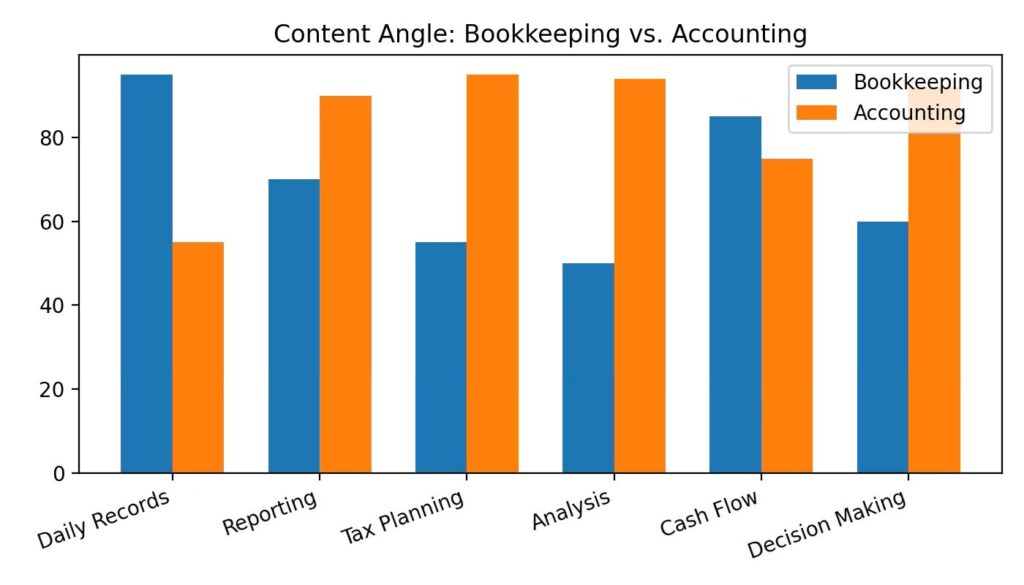
Bookkeeping and accounting are closely connected, but they are not the same job. Both deal with a company’s financial information, yet they typically focus on different parts of the financial process. Bookkeeping creates and maintains the financial records a business relies on. Accounting generally takes those records further through analysis, interpretation, reporting, tax work, compliance,

Bookkeeping vs. Accounting: Key Differences Read More »

Bookkeeping Mistakes That Cost Businesses Money

Bookkeeping Mistakes That Cost Businesses Money

Bookkeeping mistakes rarely stay isolated. A transaction entered incorrectly today can distort a financial report next month, complicate tax preparation later, and lead to a poor business decision because the owner is working from unreliable numbers. Small businesses are especially vulnerable because bookkeeping is often handled alongside sales, customer service, hiring, marketing, and daily operations.

Bookkeeping Mistakes That Cost Businesses Money Read More »

Accurate Bookkeeping: The Foundation for Growth

Accurate Bookkeeping: The Foundation for Growth

Business growth is often associated with sales, marketing, hiring, new locations, and bigger clients. But sustainable growth depends on something less visible: accurate financial records. Accurate bookkeeping gives business owners a reliable picture of what is happening financially. It shows how much money is coming in, where it is going, what customers owe, what the

Accurate Bookkeeping: The Foundation for Growth Read More »

Scroll to Top