
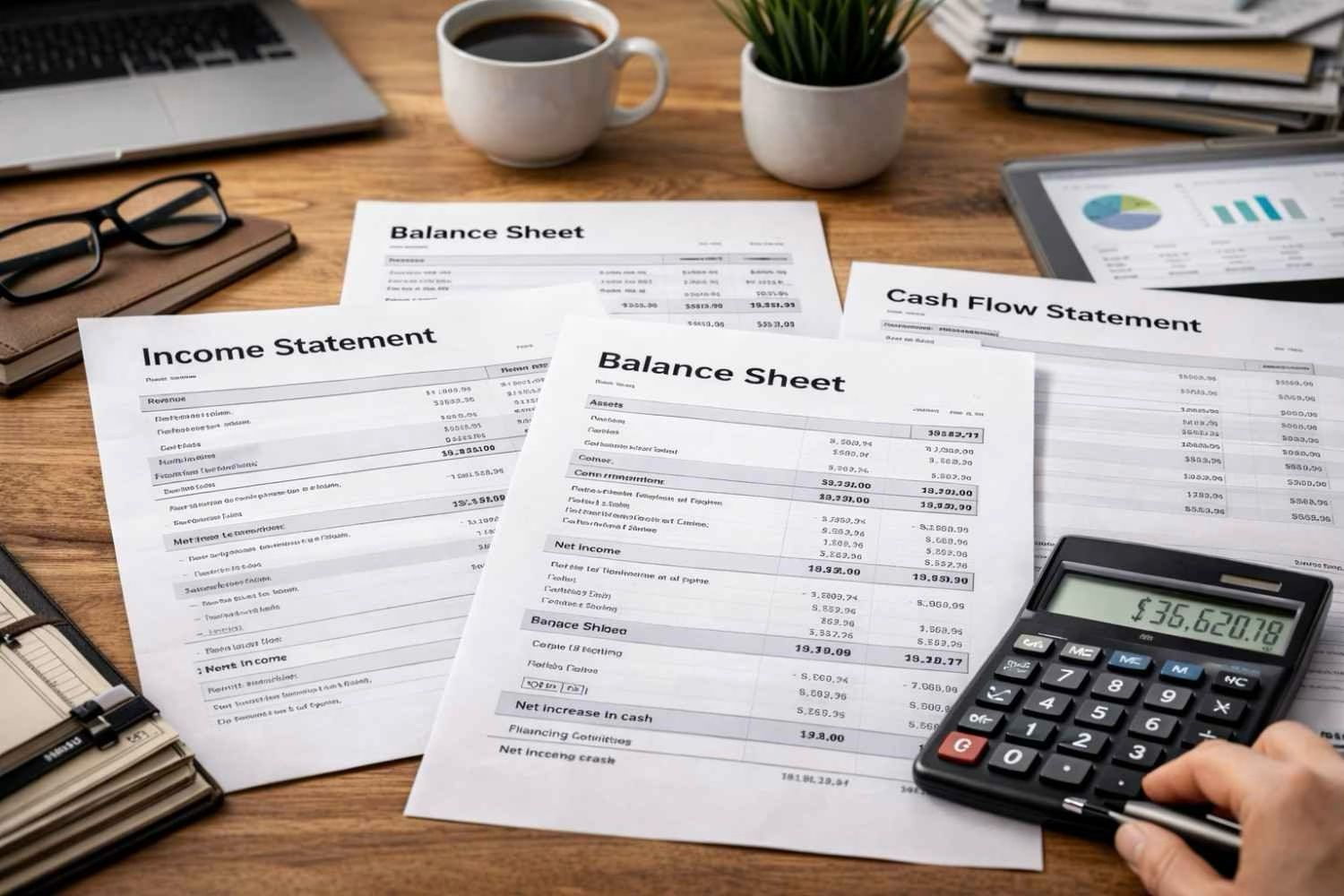

A practical guide to organizing your books before year end so tax preparation is faster, clearer, and less stressful
Tax season is much easier when the financial records are already accurate, reconciled, and organized before the year closes. When a business waits until tax preparation begins to investigate months of transactions, missing receipts, unpaid invoices, payroll records, loans, and owner activity, the process can become slower and more expensive.
Clean financial records do more than help a tax professional prepare a return. They give the business a clearer picture of revenue, expenses, cash, debt, receivables, payables, and profitability while there is still time to address problems before year end.
The exact records and tax requirements depend on the business structure, accounting method, industry, jurisdiction, and individual circumstances. This guide provides a practical bookkeeping framework that can be coordinated with a qualified accountant, CPA, or tax professional.
What Are Clean Financial Records?
Clean books are financial records that are complete, organized, supported, and reasonably free of unresolved errors.
Clean records generally mean
- Bank accounts are reconciled.
- Credit cards are reconciled.
- Income is recorded consistently.
- Expenses are categorized appropriately.
- Duplicate transactions are resolved.
- Receipts and invoices are organized.
- Accounts receivable is reviewed.
- Accounts payable is reviewed.
- Payroll records agree with supporting reports.
- Loan balances are supported.
- Major purchases are documented.
- Unusual transactions have explanations.
Why Tax Preparation Depends on Bookkeeping
A tax return relies on financial information. If that information is incomplete or inaccurate, the tax-preparation process may require additional research and corrections before reliable figures are available.
Good bookkeeping creates a stronger starting point for the tax professional.
Clean Books Reduce Last-Minute Questions
One of the biggest benefits of organized records is fewer unresolved questions during tax season.
Instead of asking
- What was this payment?
- Why does this bank balance not match?
- Was this purchase personal or business?
- Is this customer invoice still unpaid?
- Was this equipment purchase financed?
- Why is this loan balance negative?
The business can provide documentation and explanations while the information is still relatively recent.
Reconcile Bank Accounts Before Year End
Bank reconciliation compares the bookkeeping records with bank statements.
It can identify
- Missing transactions.
- Duplicate transactions.
- Bank fees.
- Interest.
- Returned payments.
- Incorrect transfers.
- Outstanding checks.
- Deposits in transit.
Tax preparation should not begin with months of unexplained differences between the bank and the books.
Reconcile Business Credit Cards
Credit-card statements should also agree with the accounting records.
Review
- Purchases.
- Payments.
- Refunds.
- Credits.
- Interest.
- Fees.
- Personal charges that need appropriate treatment.
This helps ensure legitimate business costs are recorded and duplicate charges are not overstating expenses.
Reconcile Payment Processors
Businesses using payment platforms should not assume that bank deposits equal sales.
Processors may deduct fees, refunds, chargebacks, reserves, or other adjustments before depositing funds.
Reconcile
- Gross payments.
- Refunds.
- Chargebacks.
- Processing fees.
- Net deposits.
- Processor balances.
Recording only net deposits can distort both revenue and expenses.
Keep Income Records Complete
All business income should be recorded through a consistent process.
Compare accounting records with
- Customer invoices.
- Point-of-sale reports.
- Payment processor reports.
- Bank deposits.
- Online marketplace reports.
- Other revenue systems.
Differences should be investigated rather than automatically adjusted.
Categorize Revenue Consistently
Consistent revenue categories make reports easier to review and can help tax professionals understand the business.
Depending on the company, revenue may be grouped by
- Products.
- Services.
- Projects.
- Locations.
- Recurring services.
- Other operating activities.
Avoid unnecessary complexity unless the additional categories support management or reporting needs.
Review Expense Categories
Expense categories should reflect what the business actually spent money on.
Common categories can include
- Advertising.
- Software.
- Rent.
- Utilities.
- Insurance.
- Professional services.
- Office costs.
- Repairs.
- Travel.
- Merchant fees.
- Payroll-related costs.
Do not guess when a transaction is unclear. Investigate the vendor, receipt, invoice, or business purpose.
Resolve Uncategorized Transactions
Temporary categories can be useful while information is being gathered, but they should not contain a large number of unresolved items at year end.
For each unknown transaction
- Check the statement description.
- Search for a receipt.
- Review email confirmations.
- Ask the employee or owner involved.
- Document the final category.
Remove Duplicate Transactions
Duplicates can occur when transactions are entered manually and later imported, or when multiple integrations overlap.
Duplicate expenses can understate profit. Duplicate income can overstate it.
Review repeated dates, amounts, vendors, customer payments, and transfers.
Separate Business and Personal Transactions
Personal and business activity should be kept separate whenever possible.
If personal activity appears in a business account, identify it and apply the appropriate owner-related treatment rather than leaving it as an ordinary business expense.
If legitimate business costs were paid personally, document them for appropriate bookkeeping and professional review.
Organize Receipts and Source Documents
A bank statement proves that money moved, but it may not fully explain what was purchased or why.
Organize
- Receipts.
- Vendor invoices.
- Contracts.
- Purchase confirmations.
- Expense reports.
- Reimbursement records.
- Loan documents.
- Major asset purchase records.
A searchable digital filing system can make year-end questions easier to answer.
Document the Business Purpose
Some transactions are not self-explanatory.
When appropriate, add a short note describing the business purpose, participants, project, customer, or other relevant context.
Tax deductibility depends on applicable rules and facts, so documentation should be maintained even when the final tax treatment will be determined by a professional.
Review Accounts Receivable
Accounts receivable shows amounts customers owe the business.
Before year end, review
- Current invoices.
- 30-day balances.
- 60-day balances.
- 90-day or older balances.
- Disputed invoices.
- Unapplied customer payments.
- Customer credits.
Old balances may require follow-up or professional review, especially when collectibility is uncertain.
Review Accounts Payable
Accounts payable shows amounts owed to vendors.
Investigate old bills that may be
- Still unpaid.
- Already paid but not matched.
- Duplicated.
- Disputed.
- Offset by a credit.
Clean payables provide a more accurate picture of obligations entering the new year.
Review Payroll Records
Payroll is more complex than recording the net amount employees receive.
Reconcile bookkeeping with payroll reports for
- Gross wages.
- Employee deductions.
- Employer payroll costs.
- Payroll taxes.
- Benefits.
- Reimbursements.
- Payroll liabilities.
Resolve unexplained payroll balances before year-end forms and tax work create additional deadlines.
Review Contractor Records
Businesses that pay independent contractors should maintain complete vendor records throughout the year.
Review
- Contractor name.
- Address.
- Tax documentation when required.
- Payments.
- Service provided.
- Payment method.
Information-reporting and worker-classification requirements can be complex. Coordinate with an appropriate tax or legal professional.
Review Sales Tax
If a business collects sales tax, amounts collected should be tracked separately from ordinary revenue.
Reconcile
- Taxable sales.
- Exempt sales where applicable.
- Tax collected.
- Tax payable.
- Payments and filings.
Sales-tax rules vary significantly by jurisdiction and activity.
Review Loans and Lines of Credit
Loan proceeds should not be confused with ordinary revenue, and the full loan payment should not automatically be treated as an expense.
Compare lender statements with the books for
- Beginning balance.
- New borrowing.
- Principal payments.
- Interest.
- Fees.
- Ending balance.
Provide loan statements and agreements to the accounting or tax professional when requested.
Document Major Asset Purchases
Equipment, vehicles, computers, furniture, and other long-term assets may require different accounting and tax treatment from routine expenses.
Keep
- Purchase invoice.
- Purchase date.
- Description.
- Cost.
- Financing information.
- Trade-in information when applicable.
- Date placed in service when relevant.
A qualified professional can determine capitalization, depreciation, and tax treatment.
Review Inventory When Applicable
Businesses that carry inventory should compare accounting records with actual inventory information.
Investigate
- Damaged goods.
- Obsolete inventory.
- Returns.
- Shrinkage.
- Receiving errors.
- Cost changes.
Inventory can have a significant effect on financial reporting and tax preparation.
Review Owner Contributions, Draws, and Distributions
Money moving between an owner and the business should be clearly identified.
Owner contributions, draws, distributions, reimbursements, and payroll are different types of transactions.
Correct treatment depends on the business structure and facts.
Review Suspense and Clearing Accounts
Temporary accounts should not contain large unexplained balances indefinitely.
Review
- Undeposited funds.
- Payroll clearing.
- Payment processor clearing.
- Suspense accounts.
- Unapplied cash.
Old balances can signal incomplete or duplicated transactions.
Review the Profit and Loss Statement
The profit and loss statement summarizes revenue and expenses over a period.
Look for
- Unexpected changes.
- Negative expense categories.
- Large miscellaneous expenses.
- Duplicate revenue.
- Missing revenue.
- Unusual year-over-year differences.
- Categories that no longer make sense.
Do not focus only on the bottom-line profit. Review the components that created it.
Review the Balance Sheet
The balance sheet is especially important before tax season because many bookkeeping problems remain hidden there.
Review
- Bank balances.
- Receivables.
- Inventory.
- Fixed assets.
- Credit cards.
- Loans.
- Payables.
- Payroll liabilities.
- Sales tax liabilities.
- Owner equity.
- Suspense accounts.
Investigate Negative or Unusual Balances
A negative balance is not automatically incorrect, but it deserves review when it does not make business sense.
Unexpected balances can reveal misclassified payments, duplicated transactions, missing entries, or incomplete reconciliations.
Compare the Books With Prior Years
Year-over-year comparison can help identify missing or unusual activity.
Review changes in
- Revenue.
- Gross profit.
- Payroll.
- Rent.
- Advertising.
- Professional fees.
- Software.
- Debt.
- Receivables.
- Major expense categories.
A large change may be completely legitimate, but it should be explainable.
Prepare a Year-End Question List
Instead of sending scattered questions to the accountant throughout tax season, maintain one organized list of unresolved items.
Include
- Transaction date.
- Amount.
- Account.
- Vendor or customer.
- Current category.
- Question.
- Available supporting document.
This can make collaboration faster and easier.
Build a Tax-Ready Document Folder
Organize important records before the tax professional requests them.
Depending on the business, the folder may include
- Year-end financial statements.
- Bank statements.
- Credit-card statements.
- Loan statements.
- Payroll reports.
- Contractor records.
- Asset purchase documents.
- Inventory reports.
- Prior-year tax information.
- Major contracts.
- Tax notices.
- Supporting schedules requested by the tax professional.
Keep Digital Files Organized
Use consistent file names and folders.
A simple structure might organize documents by
- Banking.
- Credit cards.
- Payroll.
- Vendors.
- Customers.
- Loans.
- Assets.
- Taxes.
- Month.
The exact system matters less than using it consistently.
Why Clean Books Can Reduce Professional Cleanup Time
When a tax professional receives unreconciled or inconsistent books, additional work may be needed before tax preparation can proceed.
Clean records allow professional time to focus on tax and accounting issues rather than reconstructing routine transactions.
Clean Books Help Prevent Missing Information
Organized bookkeeping creates multiple opportunities to notice missing records.
For example
- A bank reconciliation reveals a missing expense.
- A receivable review reveals an unmatched customer payment.
- A loan reconciliation reveals unrecorded interest.
- A payroll review reveals an unexplained liability.
- An asset review reveals a missing purchase invoice.
Clean Books Improve Communication With Your Tax Professional
Tax preparation becomes more efficient when the business can answer questions clearly and provide supporting documents quickly.
A bookkeeper can also help organize questions that require the tax professional’s expertise.
Clean Records Help With Tax Planning Before Year End
Tax planning often depends on knowing the business’s current financial position before the year closes.
If the books are months behind, the information available for planning may be incomplete.
Current records can help professionals evaluate
- Year-to-date income.
- Major expenses.
- Asset purchases.
- Cash position.
- Receivables and payables.
- Other relevant financial activity.
Tax planning should be performed by an appropriately qualified professional who understands the business’s circumstances.
Clean Books Do Not Guarantee a Lower Tax Bill
Accurate bookkeeping does not create deductions that do not exist.
Its value is that legitimate business activity is recorded and supported, while the tax professional receives reliable information for applying applicable rules.
The goal is accuracy, not artificially reducing reported income.
Do Not Make Unsupported Year-End Purchases Just for Taxes
A purchase should make business sense on its own merits.
Tax consequences can be part of the decision, but businesses should not assume that spending one dollar automatically saves one dollar in tax.
Discuss significant year-end purchases with a qualified tax advisor.
Avoid Guessing at Tax Treatment
Bookkeeping should capture what happened. Tax professionals can determine how applicable tax rules affect the transaction.
Seek professional guidance for issues such as
- Depreciation.
- Vehicle treatment.
- Home-office questions.
- Meals and travel.
- Owner compensation.
- Retirement contributions.
- Entity-specific deductions.
- Complex asset transactions.
October: Start the Cleanup
- Bring bank reconciliations current.
- Reconcile credit cards.
- Review payment processors.
- Resolve uncategorized transactions.
- Review receivables.
- Review payables.
- Collect missing documents.
November: Review and Coordinate
- Continue monthly reconciliations.
- Review year-to-date financial statements.
- Confirm payroll and contractor records.
- Review loans and major asset purchases.
- Prepare tax-professional questions.
- Discuss time-sensitive planning issues.
December: Finalize the Year
- Record final transactions.
- Complete normal reconciliations.
- Review inventory when applicable.
- Document unusual transactions.
- Collect final statements.
- Prepare unresolved-item list.
- Coordinate final year-end and tax-preparation steps.
Year-End Tax-Readiness Checklist
- Bank accounts reconciled.
- Credit cards reconciled.
- Payment processors reconciled.
- Income reviewed.
- Expense categories reviewed.
- Uncategorized items resolved.
- Duplicates removed.
- Receipts organized.
- Receivables reviewed.
- Payables reviewed.
- Payroll reconciled.
- Contractor records reviewed.
- Sales tax reviewed.
- Loans reconciled.
- Asset purchases documented.
- Inventory reviewed when applicable.
- Owner transactions reviewed.
- Clearing accounts investigated.
- Profit and loss reviewed.
- Balance sheet reviewed.
- Year-end documents organized.
- Questions prepared for tax professional.
Common Mistakes That Make Tax Season Harder
- Waiting until tax season to reconcile accounts.
- Mixing personal and business expenses.
- Losing receipts.
- Recording only net processor deposits.
- Leaving large Uncategorized balances.
- Failing to review old receivables.
- Ignoring old payables.
- Misposting loans.
- Failing to reconcile payroll.
- Missing major asset documentation.
- Making unexplained journal entries.
- Sending incomplete records to the tax professional.
Frequently Asked Questions
When should I start preparing my books for tax season?
Ideally, bookkeeping is maintained throughout the year. If cleanup is needed, beginning several months before year end provides more time to find documents, investigate transactions, and ask professional questions.
Do my bank statements need to match my bookkeeping exactly?
A reconciliation should explain the difference between the statement balance and accounting balance, including legitimate timing items such as outstanding checks or deposits in transit.
Why does my tax preparer need a balance sheet?
Depending on the business and filing requirements, balance-sheet information can be important for understanding assets, liabilities, equity, loans, receivables, payables, and other year-end balances.
Should I keep receipts if the expense is on my credit-card statement?
A credit-card statement confirms the payment but may not fully document what was purchased or its business purpose. Retention requirements vary, so follow guidance from your tax and accounting professionals.
What if I cannot identify a transaction?
Do not guess or delete it automatically. Review statements, receipts, emails, vendor information, and internal records. If it remains unresolved, flag it clearly for professional review.
Can my bookkeeper file my taxes?
Bookkeeping and tax preparation are different services. Some professionals may be qualified to provide both, while others coordinate with a separate tax preparer or CPA.
Do clean books help if my business is audited?
Organized, supported financial records can make it easier to retrieve information and explain transactions. Audit requirements and outcomes depend on the facts and applicable rules.
Should I close my books before giving them to my tax preparer?
The books should generally be as complete and reconciled as practical. Coordinate the final closing process with your accountant or tax professional because year-end adjustments may still be required.
What is the biggest benefit of year-end bookkeeping cleanup?
It creates a more reliable financial record before tax deadlines arrive. That can reduce research, improve communication, support planning, and give management a clearer view of the business.
Tax Season Is Easier When the Books Are Already Ready
Tax preparation should not be the first time a business reviews its financial records for the year.
When accounts are reconciled, transactions are categorized, documents are organized, payroll and loans are reviewed, and financial statements make sense, the tax professional receives a much stronger starting point.
Clean bookkeeping can reduce avoidable stress, improve financial visibility, and help the business enter the new year with better information.
Prepare Your Books With Maikai Bookkeeping Services
Maikai Bookkeeping Services helps small business owners maintain organized financial records throughout the year and prepare cleaner books before tax season.
If your accounts are behind, transactions are unresolved, receipts are scattered, or your financial reports need cleanup before year end, professional bookkeeping support can help organize the information your accountant or tax professional will need.