
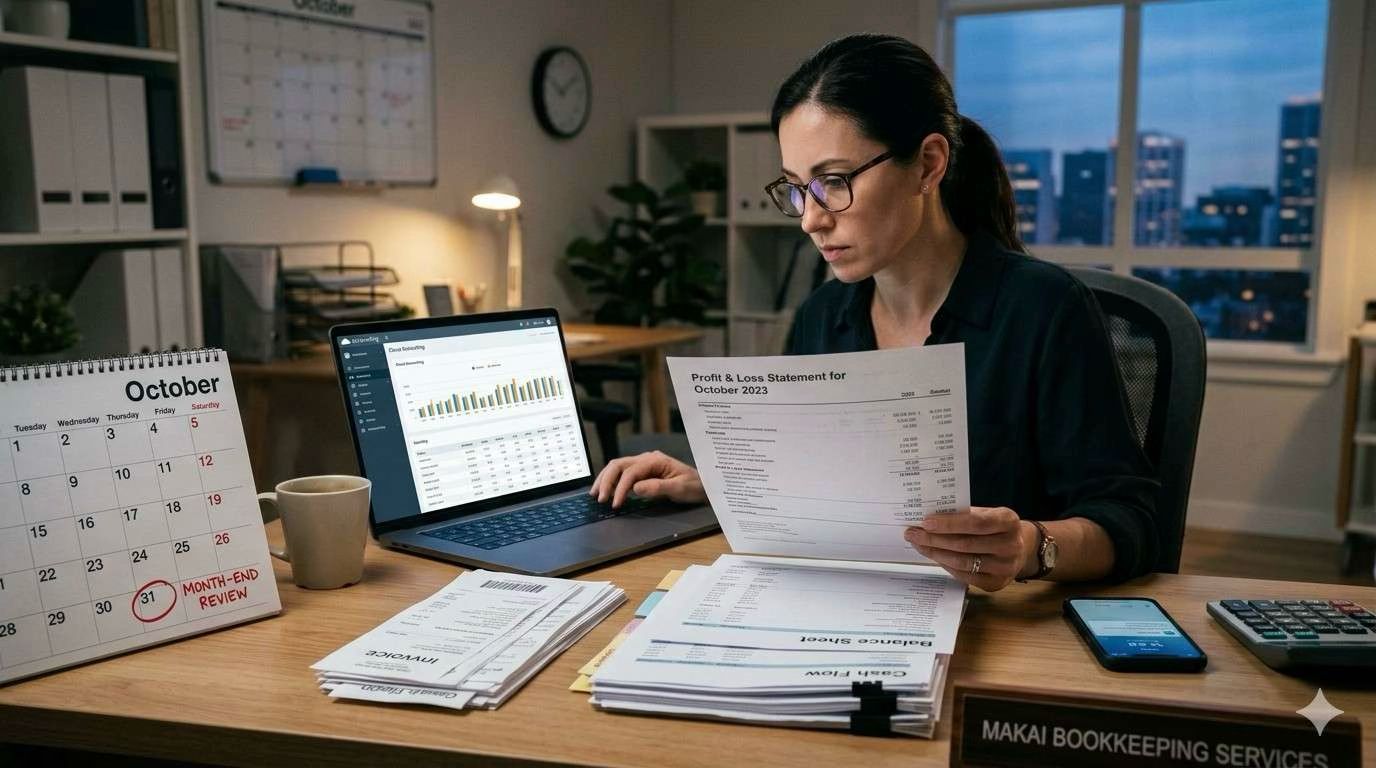


Business owners do not need to become accountants to use financial reports effectively. But they do need to understand what the core reports are saying.
Good financial reports help answer practical questions: Is the business profitable? How much cash is available? What do customers still owe? What bills are coming due? Is debt increasing? Are expenses growing faster than revenue? Which parts of the business are improving, and which need attention?
When bookkeeping is current and accounts are reconciled, these reports become management tools rather than documents that only appear at tax time. They can help owners spot cash pressure, control expenses, plan hiring, evaluate pricing, prepare for financing, and make better decisions about growth.
This guide explains the financial reports every business owner should understand, what each report shows, which numbers deserve attention, and how the reports work together.
Why Financial Reports Matter
Financial reports organize transaction-level bookkeeping data into information that is easier to evaluate. A bank balance shows only one part of the picture. Financial reports provide context around profitability, assets, liabilities, receivables, payables, and cash movement.
Useful reports can help business owners:
- Monitor profitability
- Understand cash flow
- Track customer collections
- Plan vendor payments
- Control operating expenses
- Review debt and liabilities
- Evaluate pricing and margins
- Prepare budgets and forecasts
- Support conversations with lenders or advisors
- Prepare cleaner records for accountants and tax professionals
The Core Financial Reports at a Glance
|
Report |
What It Shows |
Key Question |
|
Profit and Loss Statement |
Revenue, expenses, and profit over a period |
Is the business profitable? |
|
Balance Sheet |
Assets, liabilities, and equity at a point in time |
What does the business own and owe? |
|
Cash Flow Statement |
How cash moved through operating, investing, and financing activities |
Why did cash increase or decrease? |
|
Accounts Receivable Aging |
Outstanding customer invoices by age |
Who owes us money and how late is it? |
|
Accounts Payable Aging |
Outstanding vendor bills by age |
What do we owe and when? |
|
Budget vs. Actual |
Planned results compared with actual results |
Where are we off plan? |
1. Profit and Loss Statement
The profit and loss statement, often called the P&L or income statement, summarizes revenue and expenses over a defined period. It may cover a month, quarter, year, or another reporting period.
Why it matters
Business owners use the P&L to understand whether operations generated a profit or loss and which revenue and expense categories drove the result.
2. Balance Sheet
The balance sheet shows the financial position of the business at a specific point in time. It typically includes assets, liabilities, and equity.
Why it matters
Unlike the P&L, which covers activity over a period, the balance sheet is a snapshot. It helps owners understand cash, receivables, debt, credit cards, loans, and other balances.
3. Cash Flow Statement
The statement of cash flows explains how cash changed during a period. It generally groups activity into operating, investing, and financing categories.
Why it matters
This report helps explain why a profitable business can still have declining cash, or why cash may increase even when operating profit is weak.
4. Accounts Receivable Aging Report
The accounts receivable aging report lists unpaid customer invoices and groups them based on how long they have been outstanding.
Why it matters
It helps owners identify overdue invoices, collection problems, and customers whose payment behavior may be creating cash flow pressure.
5. Accounts Payable Aging Report
The accounts payable aging report shows unpaid vendor bills and how long they have been outstanding.
Why it matters
It helps businesses plan payments, avoid unnecessary late fees, manage vendor relationships, and understand upcoming cash requirements.
6. General Ledger
The general ledger contains detailed transaction activity organized by account. It is more detailed than the financial statements and is often used to investigate specific balances or unusual activity.
Why it matters
Owners may not review the full general ledger every month, but bookkeepers and accountants use it to trace transactions and verify what is behind reported totals.
7. Trial Balance
A trial balance lists general ledger accounts and their balances. It is commonly used by bookkeeping and accounting professionals as part of review, adjustment, and year-end processes.
Why it matters
For most owners, the trial balance is less useful as a management report than the P&L or balance sheet, but it is an important accounting control and review tool.
8. Budget vs. Actual Report
A budget vs. actual report compares planned revenue and expenses with what actually occurred.
Why it matters
It helps owners identify where the company is outperforming or underperforming expectations and whether assumptions need to be updated.
9. Cash Flow Forecast
A cash flow forecast is forward-looking rather than historical. It estimates future cash receipts and payments over a defined period.
Why it matters
It can help management anticipate cash shortages, plan major purchases, time payments, and evaluate the financial impact of growth decisions.
10. Sales by Customer, Service, Product, or Location
Detailed sales reports break revenue into useful operating categories. The exact dimensions depend on the business and how the accounting system is configured.
Why it matters
These reports help owners understand where revenue comes from rather than looking only at total sales.
11. Expense Detail Report
Expense reports show how much the business spends by category, vendor, department, location, or other dimension.
Why it matters
They can reveal rising costs, duplicate subscriptions, unusual charges, and opportunities to control spending.
12. Payroll Reports
Payroll reports summarize wages, employer costs, deductions, taxes, benefits, and other payroll-related activity depending on the provider.
Why it matters
Payroll is often one of the largest cash commitments, so owners should understand its total cost and timing.
13. Debt and Loan Schedules
Loan schedules track outstanding principal, interest, payment dates, and other financing information.
Why it matters
They help management understand future cash obligations and ensure the balance sheet reflects financing accurately.
14. Inventory Reports
Businesses that carry inventory may use reports showing quantities, costs, turnover, aging, or valuation.
Why it matters
Inventory ties up cash until products are sold, so inventory reporting can be important for both operations and liquidity.
15. Job or Project Profitability Reports
Service, construction, agency, and project-based businesses may track revenue and direct costs by job or project.
Why it matters
These reports can reveal whether individual projects are actually profitable rather than relying on company-wide results.
16. Department or Location Reports
Businesses with multiple locations, teams, or departments may need segmented reporting.
Why it matters
Segmented reports can help management identify which parts of the company generate revenue, consume resources, or require operational changes.
How to Read a Profit and Loss Statement
A P&L usually starts with revenue and subtracts costs and expenses to arrive at profit. The exact structure varies by industry and accounting setup.
- Revenue: income generated from business operations.
- Cost of goods sold or direct costs: costs directly associated with delivering products or services when applicable.
- Gross profit: revenue minus direct costs.
- Operating expenses: overhead such as payroll, rent, software, marketing, insurance, and professional services.
- Operating income: profit from operations before certain non-operating items.
- Net income: the final accounting profit or loss for the period.
Owners should compare the current period with prior months, prior years, and budgets when available. A single number is less useful without context.
How to Read a Balance Sheet
The balance sheet follows the accounting equation: assets equal liabilities plus equity. The categories help explain what resources the business controls and how those resources are financed.
- Assets may include cash, accounts receivable, inventory, equipment, and other resources.
- Liabilities may include credit cards, accounts payable, loans, payroll liabilities, and other obligations.
- Equity represents the residual interest in the business after liabilities are considered, subject to the company’s accounting structure.
Unusual balances deserve attention. Negative asset balances, old receivables, unexplained loans, or large suspense accounts can indicate bookkeeping issues that need review.
How to Read a Cash Flow Statement
The statement of cash flows can help explain differences between accounting profit and actual cash movement.
- Operating activities generally relate to core business operations.
- Investing activities generally relate to purchases or sales of long-term assets and investments.
- Financing activities generally relate to borrowing, repayment of debt principal, owner contributions, distributions, or other financing activity.
The classification and presentation depend on accounting standards and circumstances. Owners should focus on understanding the major drivers behind changes in cash.
Financial Metrics Owners Can Derive From Reports
Financial reports become more useful when owners track a small set of metrics consistently. The right metrics depend on the industry and business model.
|
Metric |
Basic Calculation |
What It Can Indicate |
|
Gross Margin |
Gross profit ÷ revenue |
How much revenue remains after direct costs |
|
Net Profit Margin |
Net income ÷ revenue |
Overall accounting profitability |
|
Current Ratio |
Current assets ÷ current liabilities |
Short-term liquidity, with context required |
|
Receivable Days |
Based on receivables and credit sales |
How quickly customers tend to pay |
|
Expense Growth |
Current expenses vs. prior period |
Whether costs are rising |
|
Revenue Growth |
Current revenue vs. prior period |
Direction and pace of sales growth |
Ratios should not be interpreted in isolation. Industry norms, seasonality, accounting methods, one-time events, and business stage can materially affect what a metric means.
Why Comparative Reports Are More Useful Than Standalone Reports
A P&L for one month tells you what happened. A P&L comparing twelve months can show a pattern. Comparative reporting helps owners distinguish temporary fluctuations from sustained changes.
Useful comparisons include:
- Current month vs. prior month
- Current month vs. same month last year
- Year-to-date vs. prior year-to-date
- Actual results vs. budget
- Location vs. location
- Product or service line vs. another line
How Financial Reports Work Together
No single report tells the entire story. The strongest financial review combines several reports.
For example, the P&L may show strong revenue and profit. The balance sheet may show a large increase in accounts receivable. The cash flow statement may show declining cash. Together, those reports suggest that sales are strong but collections may be lagging.
Another business may show lower profit because it made a large investment in staff or marketing. Reviewing budget comparisons and future forecasts can help management determine whether the spending is intentional and financially sustainable.
A Monthly Financial Review Routine
- Confirm bank and credit card reconciliations are complete.
- Review the profit and loss statement.
- Compare revenue with prior periods and budget.
- Review major expense categories and unusual changes.
- Review the balance sheet for unexplained balances.
- Review accounts receivable aging and overdue invoices.
- Review accounts payable aging and upcoming bills.
- Review cash and upcoming payroll, debt, and tax obligations.
- Review cash flow forecasts when used.
- Document questions for the bookkeeper, accountant, or tax professional.
Financial Reporting Mistakes Business Owners Should Avoid
Looking Only at Revenue
High sales do not automatically mean high profit or strong cash flow. Costs, collections, debt, and timing matter.
Looking Only at the Bank Balance
The bank balance does not show unpaid customer invoices, upcoming bills, credit card debt, loans, or other obligations.
Ignoring the Balance Sheet
Owners who review only the P&L can miss incorrect liabilities, stale receivables, or other financial position issues.
Using Reports From Unreconciled Books
Reports can look professional while containing inaccurate balances. Complete reconciliations before relying heavily on the numbers.
Comparing Inconsistent Periods
A partial month compared with a full month can produce misleading conclusions. Use consistent reporting periods.
Tracking Too Many Metrics
A dashboard with dozens of metrics can distract from the few numbers that actually drive the business. Focus on decision-relevant measures.
Ignoring One-Time Events
A large purchase, settlement, unusual project, or other non-recurring event can distort period comparisons. Add context before drawing conclusions.
Treating Reports as Tax Advice
Financial reports organize accounting information. Tax treatment and tax planning require qualified professional guidance.
What Makes a Financial Report Reliable?
The usefulness of a report depends on the quality of the underlying bookkeeping. Reports should be generated from records that are current, reconciled, consistently categorized, and reviewed for obvious errors.
- Bank accounts reconciled
- Credit cards reconciled
- Payment processors reviewed
- Receivables and payables updated
- Loans reviewed
- Owner activity identified
- Payroll entries coordinated
- Uncategorized transactions resolved
- Prior-period adjustments documented
- Supporting records organized
When to Ask for Professional Help
Business owners do not need to interpret every accounting issue themselves. Professional bookkeeping or accounting support may be useful when reports contain balances that do not make sense, books are behind, or management needs more sophisticated reporting.
Consider help when:
- You cannot reconcile cash accounts.
- Financial statements change significantly after routine corrections.
- You need location, department, or project reporting.
- You are preparing for financing or a business transaction.
- Your business has added payroll, loans, inventory, or multiple entities.
- Tax or accounting treatment questions require professional judgment.
- You need forecasting or financial analysis beyond routine bookkeeping.
Frequently Asked Questions
What are the three main financial statements?
The three core financial statements are the profit and loss or income statement, the balance sheet, and the statement of cash flows.
Which financial report should a small business owner review most often?
There is no single report that replaces the others. Many owners review the P&L and balance sheet monthly, along with cash, receivables, payables, and other reports relevant to the business.
What does a profit and loss statement tell me?
It summarizes revenue and expenses over a period and shows whether the business generated accounting profit or loss.
What does a balance sheet tell me?
It shows assets, liabilities, and equity at a specific point in time, providing a snapshot of the company’s financial position.
Why is my profit different from my bank balance?
Profit and cash are different because customer collections, debt principal, asset purchases, owner activity, and timing differences can affect cash without having the same impact on profit.
What is an accounts receivable aging report?
It lists unpaid customer invoices and groups them by how long they have been outstanding, helping management monitor collections.
What is a budget vs. actual report?
It compares planned financial results with actual results so management can identify variances and update assumptions.
How often should financial reports be reviewed?
Monthly review is common for small businesses, while some businesses benefit from weekly cash or receivable reviews and quarterly strategic analysis.
Can bookkeeping software generate these reports?
Most accounting platforms can generate many standard reports, but the reports are only as reliable as the underlying setup, transaction records, and reconciliations.
Can a bookkeeper explain financial reports?
Bookkeepers often help owners understand routine bookkeeping reports and identify unusual balances. Complex accounting, tax, investment, or financial advisory questions should be handled by appropriately qualified professionals.
The Bottom Line: Financial Reports Should Help You Run the Business
Financial reports should not be documents that business owners see only when an accountant requests them. When the books are current, the reports can become part of the company’s operating rhythm.
The profit and loss statement explains profitability. The balance sheet shows financial position. The cash flow statement explains changes in cash. Receivable and payable reports show what customers owe and what the business owes. Budgets and forecasts help management look ahead.
Understanding these reports gives owners a clearer view of what is happening financially and creates a stronger foundation for decisions about spending, pricing, hiring, cash flow, financing, and growth.
Get Clearer Financial Reports With Maikai Bookkeeping
Maikai Bookkeeping helps small business owners maintain organized, current financial records so monthly reports are easier to understand and more useful for decision-making.
If your books are behind, your accounts need reconciliation, or you want a consistent monthly bookkeeping process with clearer financial reporting, contact Maikai Bookkeeping to discuss your business needs.
Recommended Internal Links
- Maikai Bookkeeping homepage – Insert the verified live Maikai Bookkeeping URL before publishing.
- Bookkeeping services page – Insert the verified live Maikai Bookkeeping URL before publishing.
- Monthly bookkeeping services page – Insert the verified live Maikai Bookkeeping URL before publishing.
- Catch-up or cleanup bookkeeping page – Insert the verified live Maikai Bookkeeping URL before publishing.
- Why Accurate Bookkeeping Is the Foundation of Business Growth blog – Insert the verified live Maikai Bookkeeping URL before publishing.
- Monthly Bookkeeping Checklist for Small Business Owners blog – Insert the verified live Maikai Bookkeeping URL before publishing.
- Cash Flow Management Tips for Small Businesses blog – Insert the verified live Maikai Bookkeeping URL before publishing.
- How Bank Reconciliations Protect Your Business blog – Insert the verified live Maikai Bookkeeping URL before publishing.
- When Should You Hire a Professional Bookkeeper? blog – Insert the verified live Maikai Bookkeeping URL before publishing.
- Contact page – Insert the verified live Maikai Bookkeeping URL before publishing.
Recommended Authority Sources
- U.S. Small Business Administration – Manage your finances
- Internal Revenue Service – Recordkeeping guidance for businesses
- SCORE – Small business financial management resources