
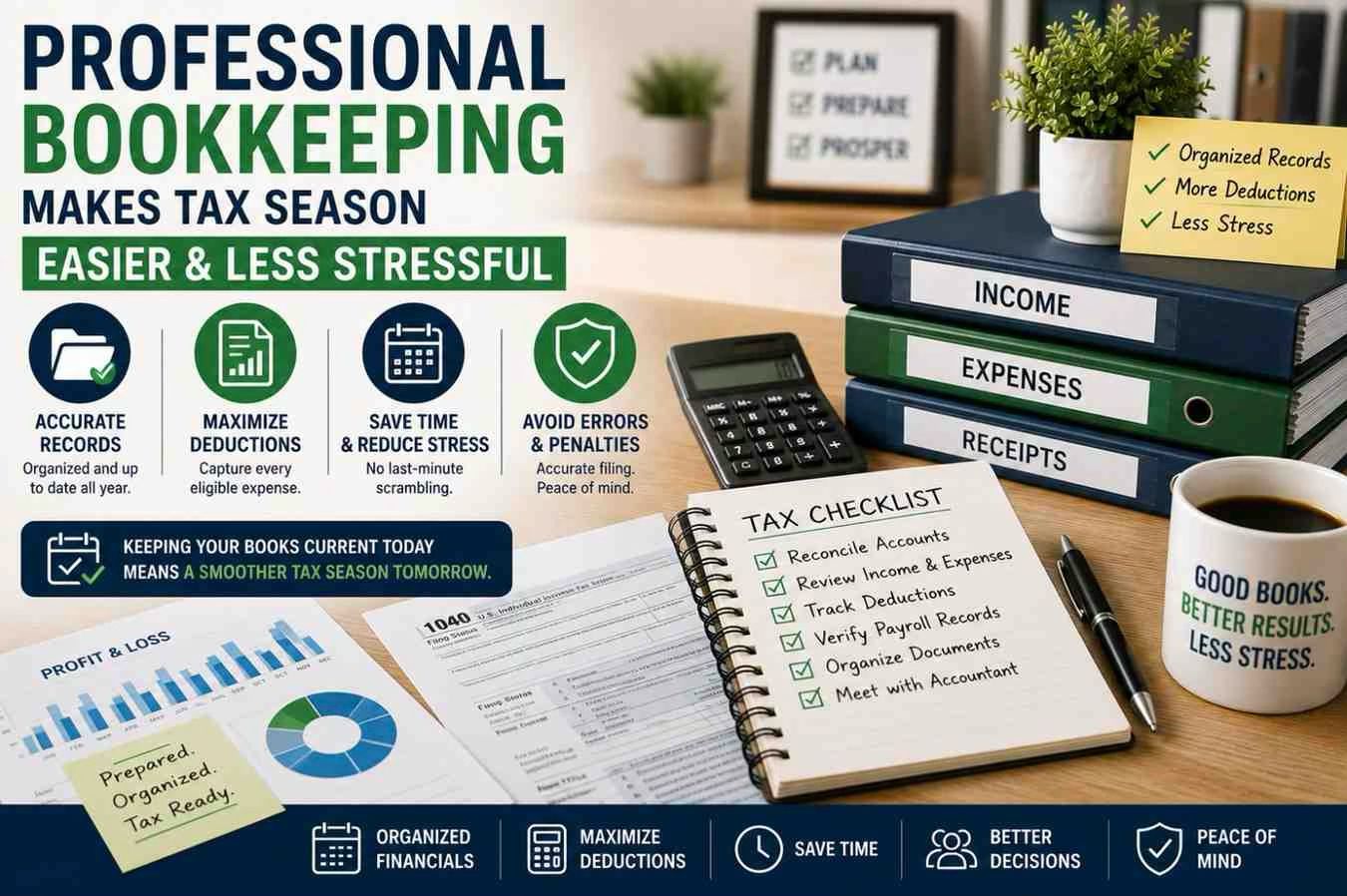

How Professional Bookkeeping Makes Tax Season Easier and Less Stressful
Introduction
Tax season can be extremely stressful for all people especially when taxes are filed with incomplete or unorganised financial records.
Accredited book-keeping is the maintenance of the years latest financial records so that after the year calender is turned it will be right there when your tax awaits you (good and ready).
Instead of rummaging for receipts and bank statements, businesspersons can just concentrate on running their businesses.
Practical insight: Keeping current books throughout the year reduces the amount of work and worry during tax filing by a whole lot.
Why Book-keeping is Important Long before Tax Season
Consistent book-keeping means organizing income data, expenses as well as payroll records and all support documentation.
Monthly checkups on account-balances help to identify important discrepancies before tax deadlines come bearing down.
Accurate records minimize mistakes, lost deductions, and delays in filing.
Practical insight: Keeping current books throughout the year reduces the amount of work and worry during tax filing by a whole lot.
Some Advantages at Tax Time
Quicker preparation of financial statements.
Enhanced collaboration with accounting experts and tax specialists
Reducing the risk of fines for errors caused by misstatements
A higher degree of confidence in answering tax questions or audits
Practice: Updating your books during the year ensures that the time and stress linked with filing your taxes gets dramatically diminished.
Common Problems during Tax Season
Lost tickets
Transactions that are unsorted
Unopened accounts
Last-minute changes to the books
Poorly Organized Documents
Practice: Updating your books during the rest of the year will significantly lessen the amount of work and stress associated with filing taxes.
Data drift: Bookkeeping Benefits When the Tax Season Arrives
This chart is shown below, breaking down which business areas benefit the most with continuous bookkeeping before and during tax season.
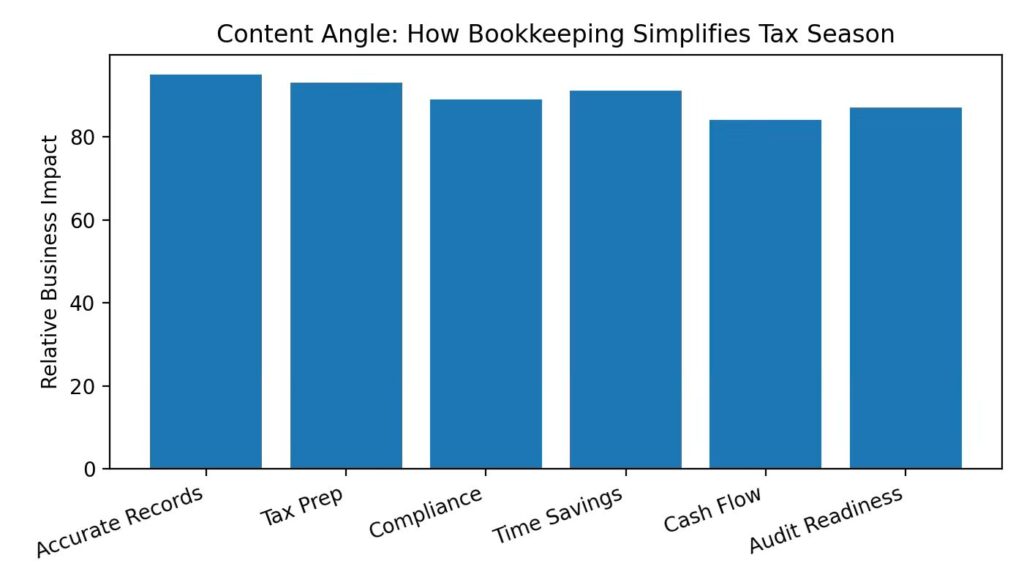
Editorial Note: Sound reports together with well-organized files and monthly book-keeping are necessary to avoid stress and improve accuracy with tax and confidence in financial records.
Extended Insights
Organized Financial Records
Organized financial records would be a last-minute search for invoices, receipts, and banking statements throughout the remainder of the year and makes correct reporting simpler.
Suggested course of action: Always harmonize all your accounts on a monthly basis, keep digital records of every financial transaction in regular audits made by your bookkeeper.
Tax Deductions
Bookkeeping that remains consistent pinpoint deductions to be taken and avoid mistakenly overlooking considerable savings on tax that real expenses qualified for, yet are unrecorded.
You may also want to get all the math sorted on your bank records, get digital copies of the accounting stuff. Make a further schedule for regular reviews to be done in the upcoming months with your bookkeeper.
Working With Your Accountant
If you are someone who prefers to spend more time helping your clients with valuable tax planning advice than having to constantly correct errors, then nothing could be more essential than having the latest and most accurate books for that purpose; nothing consumes more time, and wastes productivity as much as the correction of errors that could have been spent in tax planning.
Action Item – Monthly reconciliation of all accounts, keeping digital copies of all key financial documents, and scheduling regular reviews with one’s bookkeeping professional are the next actions to take.
All The Year-Round Financial Health
We must alter this belief; bookkeeping is a process once in a year. Progress toward monthly reporting becomes crucial for better budgeting, cash flow management, and long-term business planning.
ACTION STEP – Monthly reconciliation of all accounts kept with digital copies of financial documents and schedule regular reviews with one’s bookkeeper professional.
Tax Season Preparation Checklist
- Reconcile all bank and credit card accounts.
- Categorize all transactions accurately.
- Maintain digital receipt copies.
- Review profit and loss statements on a monthly basis.
- Keep track of all deductible expenses throughout the year.
- Verify all payroll records.
- Visit your accounting tax professional in advance of the final filing deadlines.
- Keep financial reports organized and accessible.
Suggested Internal Links
Authority Sources
- https://www.irs.gov/businesses/small-businesses-self-employed
- https://quickbooks.intuit.com
- https://www.sba.gov
FAQ
Why is it necessary to do bookkeeping before the coming tax season?
This makes it simpler to keep financial records in order, improve accuracy, and simplifies tax preparation.
Can bookkeeping mitigate errors during tax filing?
Of course. Proper books can actually flush out discrepancies beforehand returns are filed.
Should bookkeeping be done throughout the year?
Yes. It is best to have bookkeeping continually throughout the year which makes tax season easy and better supports better financial decisions.
Call to Action
Maikai Bookkeeping Services is available to business owners for year-round tidy bookkeeping, on-time reporting, and reliable financial support. Save yourself from all the taxing season stress. Reach out to us today.