
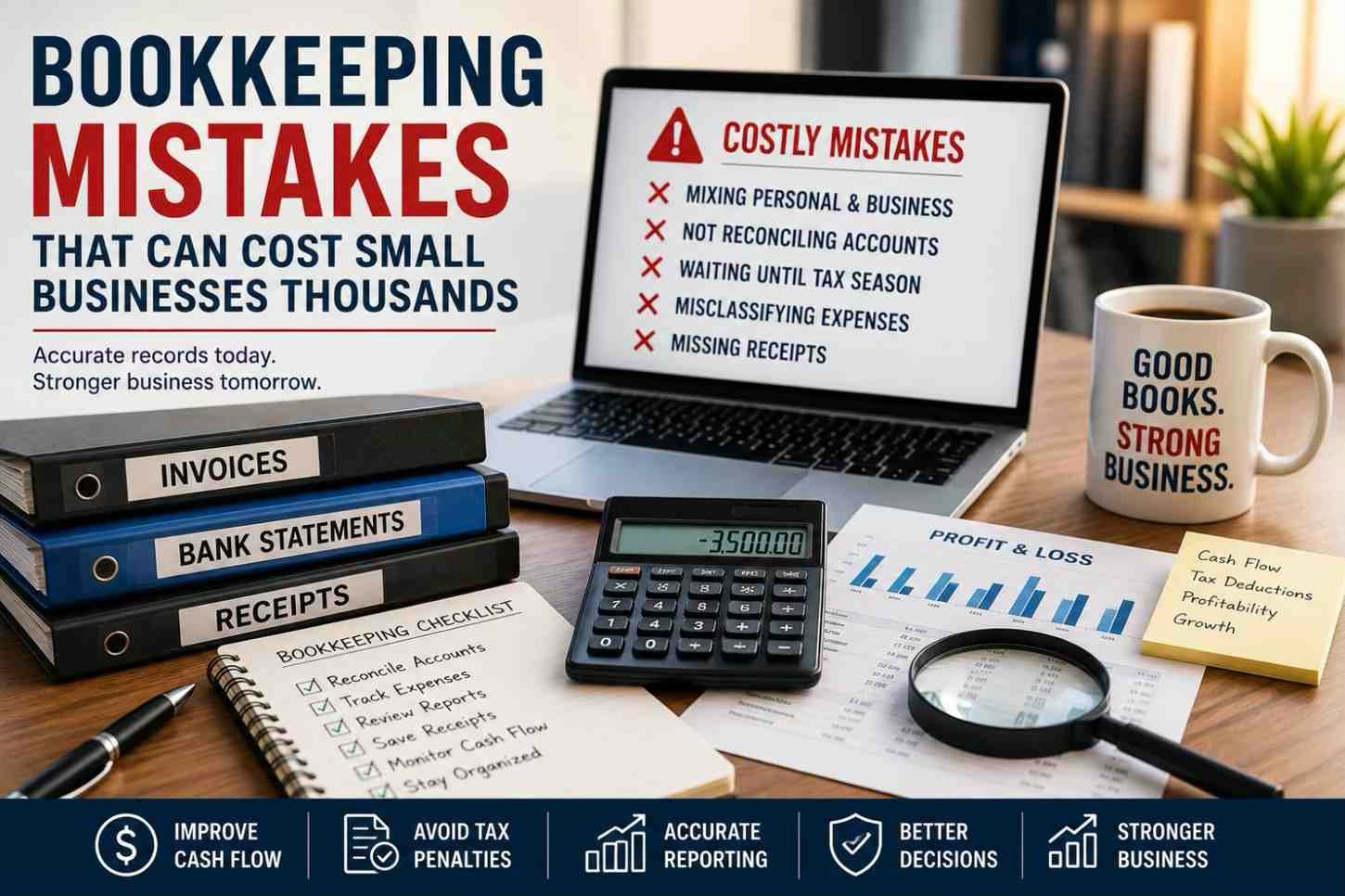

Bookkeeping Mistakes That Can Cost Small Businesses Thousands
Introduction
Mistakes in records are generally a tiny problem in bookkeeping before they worsen and eventually develop into costly glitches that seriously influence profits, taxes, and growth of a company.
Many small businesses face the same difficulties with their accounting, maintaining it as not regularly updated, in an unearned form or at times false.
This poses a problem since many small businesses do not have access to enough money to afford accounting staff, thus bookkeeping will have to be done.
Practical Tip: Regularly made small bookkeeping improvements are very often more productive throughout a year than making strides to rectify several months of records simultaneously.
Common Bookkeeping Mistakes
Mixing together business transactions with personal ones
Not reconciling bank account statements on a monthly basis.
Not preparing accounts when it is the right time nor at filing time.
Wrong entries: No proper separation between income and expenditure
Foregoing an accounts receivable or accounts payable
Doing away with receipts as evidence for transactions made or not recording transactions
Really Practical Tip: As for small improvements that should be made in a consistently ensured way throughout the year, they often prove to be more effective than rectifying months of records all at once.
The financial impact
Sometimes more misconceptions can result in missed opportunities and getting lower quality service at higher prices or by being taken advantage of in some way by the company or seller involved.
That real-time review of a record changes the whole scenario while places the business right back in the place where it caused economic problems, thereby rendering the whole project such a waste of time and financial resources since, looking only at the cash as yet received, such might also harm the way the firm performed business.
Poor financial information just makes it hard to know your return or how to plan your future investment.
Errors can also stall applications for financing because any financial statement the lenders rely upon has to be accurate.
The nitty: Small bookkeeping improvements made continuously throughout the year are often more effective compared to trying to adjust months of records all at once.
Mitigating Costly Errors
Review your financial statements monthly.
Maintain consistent accounting software.
Provide backup documents with funding in terms of financial records.
Seek assistance from a seasoned bookkeeping professional.
Regularly check the financial reports for any irregular behavior.
Small bookkeeping improvements throughout the year are usually much more effective than trying to correct records over months.
Message Angle: The Cost of Poor Bookkeeping
Sometimes these guys go around dictating their orders, making a complete mess out of legitimate business operations just like bookkeeping.
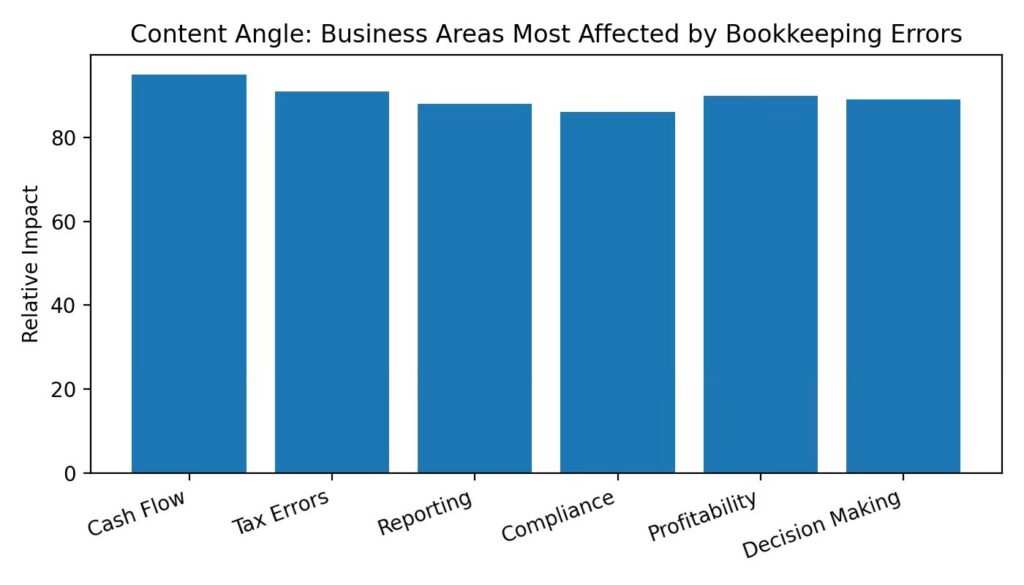
Editorial take away: Accurate book keeping leads to predictable cash flow thus creating strength in tax compliance, financial reporting, profit, and informed business decision-taking.
Divulged Insights
Cash Flow Management
Regular bank reconciliation helps one to identify the early signs of getting overdue invoices, duplicate payments, and all unexpected expenses being brought as early as possible before they start turning into heavier financial problems.
Action point: Set the appointment for once in a month or after a few months in a financial record, go for the bank reconciliation and investigate all the doubtful transactions as per need.
Tax Compliance
Flawless bookkeeping saves you from mistakes in filing, deductions omitted, and penalties reimposed by the Internal Revenue Service should be enough to encourage record keeping and this a little easier tax preparation.
Action Points: After setting a reminder for that monthly review of the financial transactions, consider an immediate examination of all accounts and any unusual records.
Financial Reporting
Good, dependable Financial Statements will provide business owners with such needed real-time information to make a good business decision take about profitability, cost management, and future investments.
Action step: Schedule a monthly review of financial records, reconcile all accounts, and investigate unusual transactions right away.
Professional Bookkeeping Support
Employing a bookkeeping professional will keep time posted, plus accuracy is greater and it provides more of the customers with time to run their businesses
Action step: Plan to have a monthly thorough examination of records, reconciliation of all accounts, and due diligence over any odd transaction
Prevented Mistakes in Bookkeeping Checklist
- Keep personal and business financial and do not mix.
- Ensure a reconciliation of all accounts is done every month.
- Assign each transaction in one of the proper categories.
- The digital receipt should exist for reference purposes.
- Save and house all your financial statements each month.
- Check all expenditures against invoices and bills.
- Securely back up all the accounting recorders
- Monthly consult with a professional bookkeeper.
Suggested Internal Links
Authority Sources
- https://www.irs.gov/businesses/small-businesses-self-employed
- https://quickbooks.intuit.com
- https://www.sba.gov
FAQ
What is the most common error in bookkeeping?
Mixing private and business costs can be one of the most common and expensive mistakes.
How frequently should financial data be checked?
Monthly review and accounting can help in keeping financial data precise.
Can professional bookkeeping save money?
Absolutely. Bookkeeping actually saves good money as it helps in reducing expensive errors, contributes to effectiveness, and also enhances financial decisions.
Call to Action
We help small offices to prevent expense-causing bookkeeping mistakes by maintaining error-free record-keeping along with periodical reporting. Initiate contact with the company today to keep your organizational money matters even and business on course.