

Financial reports provide essential insights into the operations that a business undertakes. Learn about these reports and how they can be beneficial for the entity.This guide thoroughly analyzes the importance and the dynamics of financial reports.
What is financial reports?
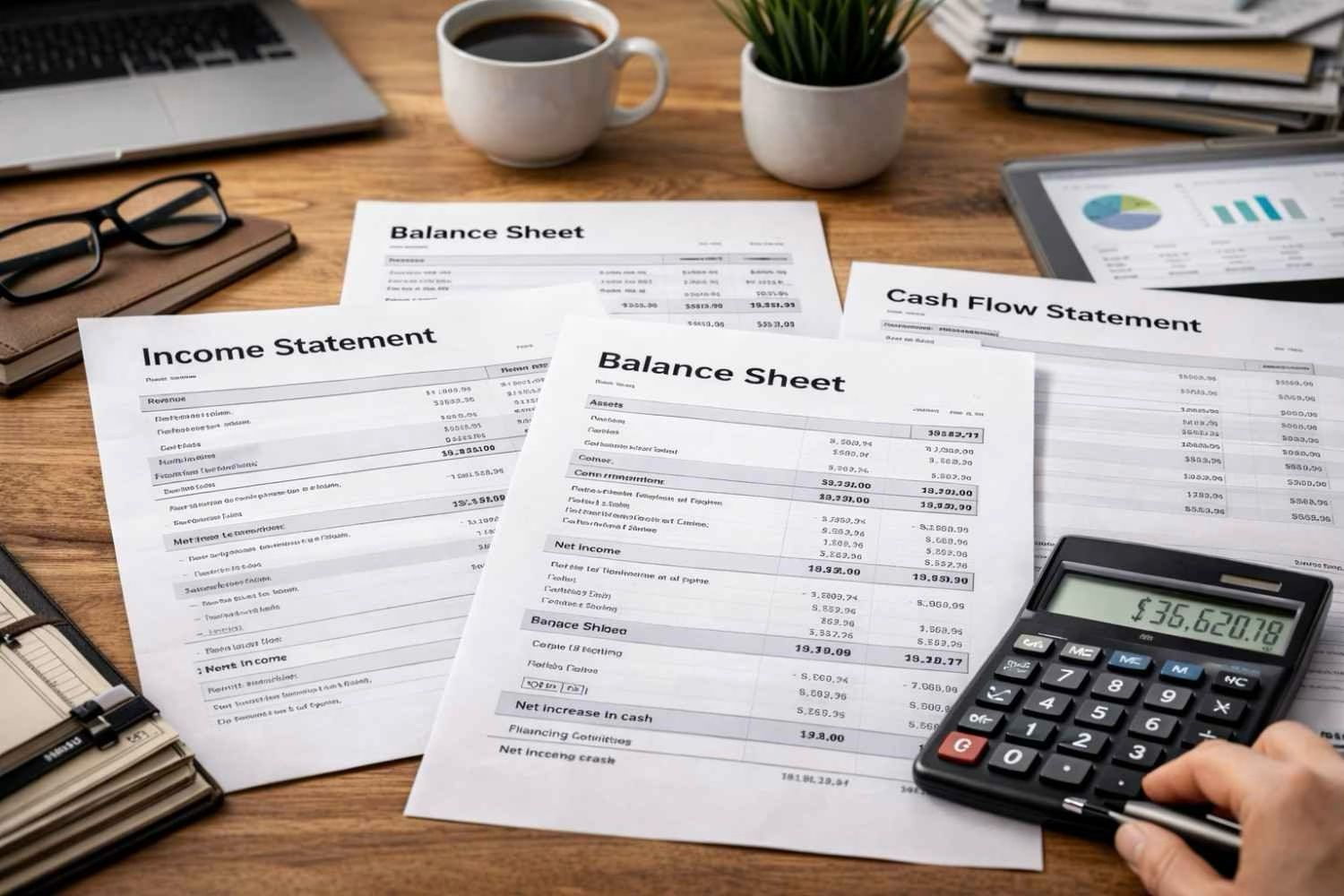
Financial reports are structured, formal records of financial activities and position of a business, individual, or any other entity. These reports are vital for understanding the financial health of an organization and furthering strategic planning efforts. Apart from this, these reports also help in meeting the requirements of tax law. For the small business entity, financial management could reflect basic problems in production and indicate ways in which the business could be sustained in the long run.
The main types of financial reports are:
- The Profit and Loss Statement: which is also known as the income statement outlines that at present the company should represent the trading of revenue and various expenses for overall calculation of profit and loss.
- Balance Sheet: On the other hand, balance sheet is also considered as a snapshot of the position of a company that reflects its assets, its liabilities, and equity at the time. With that given account, one can have an idea of how the financial stability stands.
- Cash Flow Statement: In addition, the cash flow statement keeps constant track on all incoming and outgoing cash transactions of a business over a certain period that facilitates liquidity management.
- The statement of owner’s equity gives every detail for changes in the owner’s equity of a given period.
Small businesses benefit from the fact that accurate and timely reports help when preparing for audit, understanding budget strategies, and applying finance funds-each are something that cannot be done without being compliant with regulations.
Why financial reports Matters for Financial Checklists
Financial checklists are critical for keeping business accounting related tasks in the correct order, to maintain accuracy and consistency, and to make everything in business systems easier and more efficient. It is internally focused on the financial reporting-some of the most important aspects of any business operations. Without excellent and valid reporting, picking the proper material for business decisions becomes practically impossible. Each line in a financial checklist—whether it is the entry of an expense record tracking, the confirmation of a bank statement-is anticipated to feed from-and in turn lead to-the core financial information reported.
How do financial reports support the checklists and why can’t you avoid this vital component in your financial operations?
1. Improved Decision Making
Above all, financial statements become a solid foundation for hard decisions. Vis a vis knowing the profit that stood on their last legs and in many cases immediately shows those cash flow trends right in the area most significantly allied with small business owners’ strategic plans for their operations-and hence the decisions really required for their operations to be implemented, such as their need to curtail expenditure.
2. Fiscal Responsibility & Transparency
Undoubtedly, small business reports should be transparent. The financial performance would be made clear for the partners, banks, and potentially investors. The records should be clear or other relevant documents that will ease the internal wrangles and keep it out of sight from the investigators when they may want to find out something about financial validity. Transparency is considered good practice more so than a necessity in the timespan of the increased regulatory scrutiny.
3. Time-Saving Automation & Integration
A lot of accounting software companies provide modern software tools such as QuickBooks, Xero, or FreshBooks which help automate financial reporting in that one can, in fact, populate lots of checklist items with data directly. Therefore, small businesses can harness technology into their financial workflow saving them time and reducing the risk associated with human error as far as compliance is concerned.
4. Essential for Tax Filing & Year-End Close
No financial checklist is ever completed without including several tax items that must make it possible to close the year in end and so that the tax returns will not have any difficulty in determining the income statement and expense report. Also, this end part is well balanced. Needless to say, all at the same time, the report is sought by the tax return preparers of CPAs.
5. Credit and Funding Applications
Want to apply for a loan or attract investors? Then your financial report will play on how financially marketable you are. Your bal sheet, cash flow statement, and income reports will have to be scrutinized by banks and lenders to see the repayment capacity and business standing you hold.
6. Growth Forecasting
Analyze trend reports to forecast future sales growth, establish realistic sales targets, and assess whether scaling is financially viable. Old trends can be extrapolated while building an indicator for future opportunities and obstacles and mentioning alternative places for checking historical records.
Understanding Common Small Business Reports
Clearly, the fewer conglomerates-only type of big business, every small business-may it be retailer, startup, or service provider-requires a system allowing them to create, monitor, and act on regular financial reports. Let’s now take in-depth look at this type of system:
- General Ledger: Embraces all the financial activities of your business-entering each of the transactions on your financial reports.
- Trial Balance: List the balances on all ledger accounts-the debits equal the credits-the checker ordinarily used for internal correctness examination.
- Account Receivable Report: Report of what customers owe you for, what’s overdue, and the average time it takes for your customers to collect from you-makes the cash pipeline one can manage.
- Accounts Payable Report: This report shows your outstanding bills due to vendors or suppliers, which can be tied back to cash position. Better cash management often involves setting due dates.
- Budget vs. Actuals: Helps assess how your actual finances stack up against the business plan and identifies drained resources or overspending areas.
Each individual document contributes to forming a full financial picture of a business, as it is often cited in monthly or quarterly financial checklists. For business owners who are looking for ways to centralize and streamline their processes, automated templates and reporting dashboards can convert a time-consuming process to a strategic asset. Understanding the way financial reports affect your bookkeeping speaks enough on results; we’ll delve into some real-life examples immediately.
Best Practices for Using Financial Reports in Financial Checklists
For SMEs and the finance team, the integration of financial reports into a structured financial checklist sets the base for good decision making as well as helps in long-term planning. Following are some of the best practices in the field to implement and optimize the use of financial reports:
- Set And Validate Clear Reporting Periods: Also, when all financial results in a firm are covered in a commonplace, a standard period of analysis can be observed as monthly, quarterly, or up to yearly.
- Encourage Use Of Standardized Templates: This would mean all the different departments would report a certain structure that crosses all of the different departments so oversight and misunderstanding in practice can be decreased.
- Skillfully Set Up Automation Processes: The kinds of accounting software that can on its own generate reports are just some of the nifty ones that will include profit and loss statements, cash flow statements, and basically all a good company needs, and it chips off time spent on accuracy and gives more time for analysis.
- Develop Trainings For Your Team: All should comprehend what they read, how to interpret the data presented, then what is done with the information, usually contained in business financial reports, through regular refreshers, otherwise bringing in the necessary finance experts for a specific topic every now and then.
- Regulate KPI-matching performance reports: instead, provide KPI-related data in reports aimed toward monitoring performance vis-à-vis particular business aims such as revenue growth, cost, or customer acquisition.
Common Mistakes to Avoid
Most businesses take the pain of financial reports but do not glean much from this due to issues related to their implementation or analysis. Avoid the following pitfalls to ensure that you can derive the most out of your data:
- Ignoring the Real-Time Data: Having only past data might cause fewer responsiveness capacities. Small business reports nowadays have detailed reviews about the very recent or up-to-date transactions.
- Highly Detailed: Detailed reports will overshadows valuable trends. Less should be emphasized on detailed reports; rather lean toward metrics that feed decision-making like gross margin or customer churn rate.
- No Comparative Analysis: Without any benchmarking against the past business cycle or the business itself or at times the industry standards, it becomes difficult to trace improvement signals or warning indications.
- Poor Visualization: Fragmented or busy graphic interfaces will annoy users; use charts and coloring to designate very necessary data.
Tailoring Financial Reports for Small Business Success
One of the successful strategies for small businesses was developing custom financial statements. Such an inexpensive financial reporting will be tailored to the size, stage in the growth of your business, and industry.
To tailor the report for increased impact:
- For being in the start-up phase of the business: Include a burn rate, financing sources, and breakeven analysis as part of the early financial report. Such financial reports will help guide resource allocation and also assist in the validation process of the business model.
- Growing stage: Be busy with building revenue forecasts, customer acquisition costs, and departmental budgets detailing growth. The checklist is used to keep close watch on the sustainability aspect of the expansion.
- Mature Stage: Established companies have more time to perform historical trends on profitability, performance of assets, and shareholder returns.
- Industry Metrics: Different areas vary from another which metrics are used by organizations such as inventory turnover would be a focus area for any retailer, while other SaaS-based enterprises would be monthly recurring revenue (MRR) and even customer lifetime value. Your financial insight and management report should focus on those figures that matter for your type of market and the style.
Integrating Financial Reports with Other Tools
Financed reports become more invaluable whenever they are brought together with other resources in other departments. This is how a combination of reports and technologies leads to a much greater depth of insight:
- CRM Systems: Linking financial data with customer relationship management (CRM) would enable monitoring by revenue stream, whether customer or project which would allow budgeting by sales and marketing in the future.
- Inventory Management: Real-time monitoring would include syncing to inventory management systems on cost of goods sold (COGS) and valuation for inventory, which are crucial aspects in cash flow management.
- Payroll and HR Software: This, in alignment with departmental cost reports and hourly work during production or productivity checking against the cost of salaries compared to outcomes.
Tracking Progress with Financial Reports
Don’t use financial reports only to consider the past. Think about using reports to mold the future. Effective financial controls involve monitoring performance, reviewing outcomes, and adjusting policies. Use the following guidelines to aid your review activities:
- Monthly Reviews: Focus on short-term performance and cash flow. Minor decisions for very recent losses or wins can be made immediately.
- Quarterly Reviews: This time is for strategic plan goal clarification exercise, allocations of budget, and identification of requirements of resetting resources. It is almost always actual vs. the assumed vs. the learned.
- Annual Reviews: Evaluate specification options for a financial health check. This involves an analysis of how the current year has been spent in relation to the past year, taxes, and the information about returns on capital to guide future development.
Using Financial Reports for Better Financial Literacy
On that account, another one of the unsaid advantages of well-arranged financial statements comes from the fact that understanding the basics of financial literacy in redevelopment finds where you are deficient. Whether you are by yourself or are heading a small team, educating all shareholders in what the numbers are echoing speaks of something good in arbitration:
- Data-Driven Culture: Encouraging the use of financial statements to guide everyday departmental decision-making.
- Transparency: Committing critical measures to staff establishes more commitment of intrinsic incentives through achieving performance outputs.
- Investor confidence: Regular and more comprehensive financial reporting contribute to building the trust upon the investors and lenders opening with more finance opportunities.
Interpreting and Using Financial Reports Effectively
Now that we have explored why financial statements are important and how they are structured, let us see how small business owners need them to arrive at better financial decisions. The right analysis is underlined by understanding what the numbers mean and how they tie in with your goals.
Profit and Loss is the best place to start. Ask questions like: Do expenses correlate with revenue? Do you notice any income trends that are seasonal? Identifying patterns helps allowing you to make informed adjustments, whether it’s scaling marketing for peak times or tightening the budget during slower months.
The balance sheet, on the other hand, paints a picture of where a company is pertaining to health, debt, liquidity, and opportunities in investment-all during a specific point in time. For instance, an excess of accounts receivable would mean that your money is available but probably busy, not at work for you; this has to be managed well by smaller businesses.
Generally underestimated, that’s why many companies don’t fully attend to the cash flow statement. Everything comes down to a matter of too little cash flow. It is, indeed, one of the top problems why most small companies would operate. Keeping an eye on inflows and outflows allows you to avoid running out of cash to keep the company afloat.
By reviewing this monthly report, you keep your operations perfect and you can effectively execute your growth strategy.
Regular updates of these reports lead small entrepreneurs to sorting out inefficiencies and capitalize what is working for them. This prepares them to enter tax season, gives enough data for investors analysis, but a CPA would probably not be a great help after all, just consistent habits and a willingness to learn.
Using Financial Reports to Drive Growth
Moreover, financial reports provide a guideline for how to get up and run well. Past financial information—forecasting from it—enables the user to foresee revenue, prepare staffing needs, and develop realistic budgets based on particular goals. Using financial reports, one can set goals that are far more accurate and grounded in the facts.
When you are growing your business in size, the requirement is critical. Financial statements support the meeting with lenders, including grant providers and potential investors who might want to come up with their own idea on how practicable the business proposition is. It is credible that makers continuously display one of the clear proof that profit margins together with strong cash flows beyond mere imaginative ideas are bound to boost credibility.
Benchmarking your performance provides the potential to switch sides against industry standards and competitors in terms of financial KPIs. By doing so, you will be able to see what gaps exist, as well as where your organization is strong. Gap identification enables changes in areas that are unavoidable, such as cost control strategies, product diversification, pricing policies, among others.
Getting Started with Financial Reports — Even as a Beginner
Launching isn’t everyone cut out for swim. However, with the right tools and templates, just about anyone has hit enough reporting with enough force to spark interest in how others do it.
Cloud accounting tools can do this for you now and make much more than that: from QuickBooks to Xero, everything goes online-automate reporting, produce reports even into visualization, and make lighter the interpretation process.
For micro to small-scale enterprise owners, this report model is what will hasten your journey, helping you to record very critical metrics-instead week after week-without overlooking them just because you are organized monthly. This will make reporting a must-have practice in transforming the way you view the performance of your business.
Frequently Asked Questions
What is financial reports in simple terms?
Financial reports is a strategy or concept used to improve small business reports by focusing on structured, intentional methods.
How does financial reports help?
It helps improve performance by aligning your content with search behavior and industry best practices.
Can I apply financial reports myself?
Absolutely. With the right tools and structure, even beginners can begin applying these principles effectively.
What tools should I use?
Start with Google Search Console, SEMrush, and keyword research tools. These provide visibility into how financial reports impacts performance.
Next Steps
Ready to take control of your business finances? Get started today with tools that simplify financial reporting and help you grow your business confidently.
- Download the report template for free and start tracking key metrics today.
- Learn more with our guide on small business financial overviews.
- Read expert advice on using reports for decision-making.
- Explore financial literacy basics from U.S. Small Business Administration (SBA).
- Stay updated with current trends through Business News Daily.