

Batch invoicing and all about saving time is just explained about almost everything you might want to know about batch invoicing and learn further tips, examples, and strategies to get significant results from them.
What is batch invoicing?
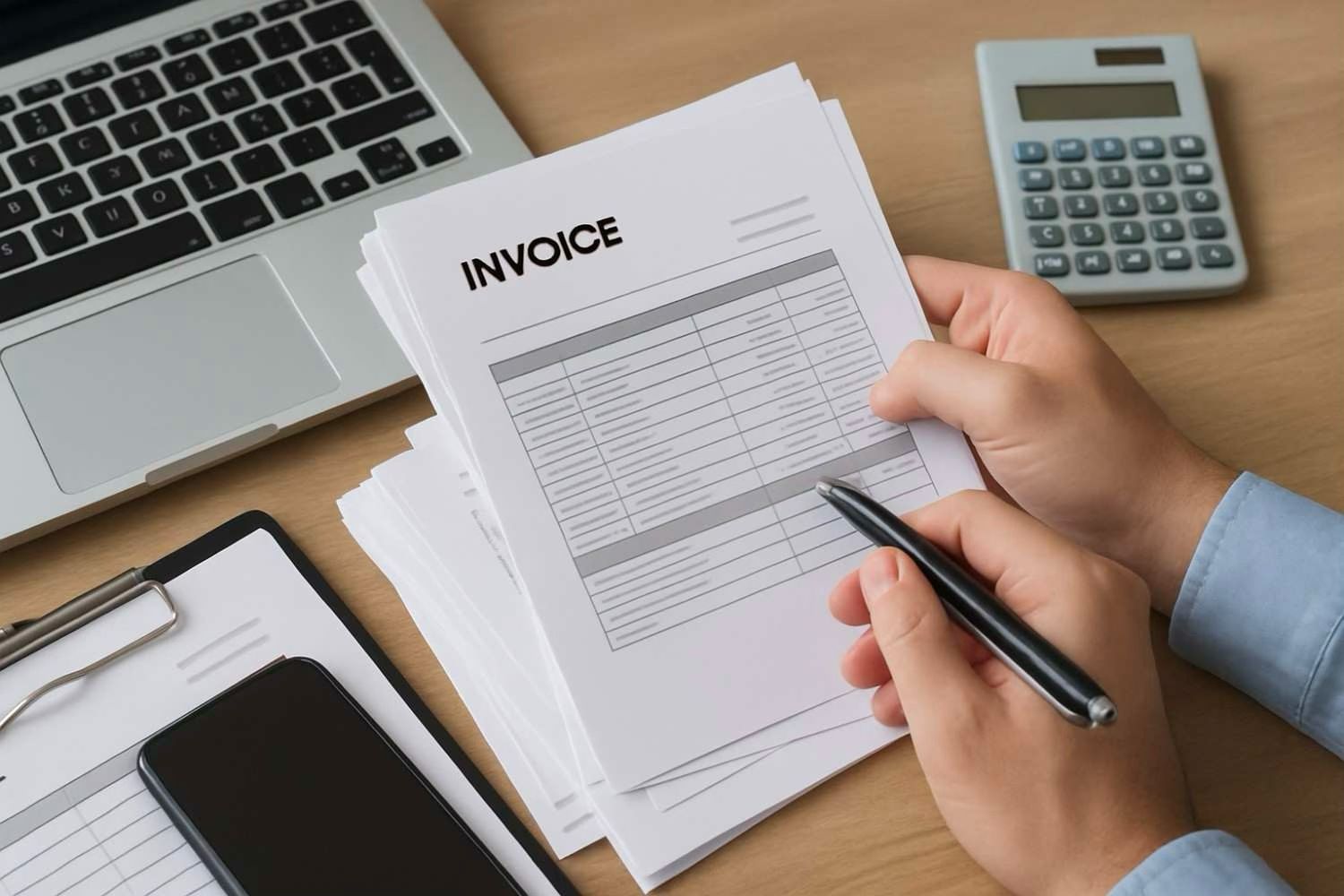
Batch invoicing is a financial concept in which businesses can generate many invoices at once and send them at the same time. So, instead of creating each invoice manually and sending it one by one, you can use the facility it provides to lighten your enormous billing process-a time and money saver. This process proves to be quite useful because it serves many businesses that are high on returning customers, have a subscription model, or handle high volumes of relatively small training transactions at a time.
It is usually executed by compiling all customers’ items or services that shall appear on the bill, creating a standardized template for the bill, and executing to a piece of software that has its batch processing mode. This results in a considerable reduction in creating invoices, less error in billing, and less manual entry-all of which amount to a great and efficient billingness.
The truth is that batch invoicing is now not the preserve of the highly technical or the advanced. These accounting and ERP (Enterprise Resource Planning) tools now have it integrate straightforwardly into their specifications, offering a relatively low-set-up path for small and medium businesses to adapt.
Why batch invoicing Matters for Workflow Efficiency
Improved workflow in the fabric of a working station is not often an improved invoicing process. However, it most certainly has a considerable role to play regarding the money that comes in and the relationships of businesses and their customers and even within time management across departments. Batch invoicing turns out to be a great strategy to bring matters to the salient side, simplifying operation, reducing delays, all the while preventing finance teams from getting stuck on repetitive billing rather than being engaged in strategic work.
Businesses see great benefits from bulk invoicing; such an approach slashes the time spent processing invoices. The constant task of creating and sending dozens upon dozens, perchance even hundreds, of invoices every month can consume administrative hours that involve toggling between customer profiles, recalculating taxes or discounts, and formatting diverse invoice layouts. The automation of repetitive duties in a single operating environment also renders the manual methodology to be simplistic.
The point within the case of this scenario, in which being fast and accurate are among the most strategic metrics of performance, is all about the capability to make it happen more quickly. In that respect, the overall health of one’s cash flows will be both further fortified and protected from any unforeseen consequences due to late payments, which, in turn, are indispensable attention elements for streamlining the operation and growth as well. The automated solution also limits human risks such as losing payments and that it does not keep clients happy too.
An illustration may clarify this. For example, a marketing agency used to spend a little less of two whole days to create soon-to-be-manually deducted invoices for 80 clients each month. However, this task shrank briskly to some less than an hour since batch invoicing was begun and was associated with significantly less data-entry errors. Now extrapolate this time saving through the next 12 months, and let the benefits of batch invoicing in the overall workflow efficiency be clear.
Common Scenarios Where Batch Invoicing is a Game-Changer
Batch invoicing is not an icing on the cake, but a means to change the entire billing mechanism to suit any business scenario, including at least some of the following:
- Subscriptions: SaaS providers, digital content houses, and memberships to organizations are ideal in attracting repeated payment from mainly the same customers. By this method, the continuity in invoicing would be handled using batch invoicing.
- Trade and services: Such activities can be the most prominent cases where hundreds of transactions flow across the screen daily. And here: the batch invoicing process is used to deliver the combined dollar-or hundreds-of-dollar invoices to business clients at regular intervals.
- professional services: Accountants, consultants, and freelancers performing professional services under retainer agreements can come up with a service invoice for several clients each month and not have to issue them individually.
- Educational institutes: Schools and training centers can be able to collect tuition so as to optimize the most profitable invoicing with respect to event and fees.
- Property management: Rent requests from each tenant are made at the beginning of every month for property management purposes.
This demonstrates that batch invoicing will have less overhead for processing and shall maintain consistency but with reusing invoice designs, reenter payment terms for issuing manual reminders business can avoid this.
The Technology Behind Batch Invoicing
The foundation of batch invoicing releases comes to automation through digital means. This can easily be accomplished using any of the many accounting platforms like QuickBooks, Xero, FreshBooks, Zoho Books, as well as ERP suites like NetSuite or SAP. More advanced billing systems provide a method for clients to define invoice templates, configure the batch rules (like, for example, collections of client groups, recurring due dates, pricing structures) and should automatically distribute the invoices via the email or online portals on pressing a button.
Most advanced solutions provide APIs that allow you to connect with your CRM, project management tools and e-commerce store so that you naturally invoice the customers who have consumed your work. For example, when a project reaches its milestone with Asana or Trello, then automatically add the creation of an invoice in the batch scheduled for that week.
Invoices are instantly generated, securely backed up, and accessible from anywhere with cloud technology. With role-based access, teams can easily work together on billing without worrying about data security issues or figuring out things regarding the version control. With the analytic capability built-in, a business can keep track of its invoice performance on send rates, open rates and time to payment, all for purposes of further improving invoicing processes.
Benefits of Adopting Batch Invoicing
Using batch invoicing can often make organizations report a wide array of benefits beyond time savings:
- Reduced mistakes: It helps avoid errors. The system prohibits most common mistakes such as multiple invoicing and improper total summing by reducing manual type of data processes into account.
- Keep consistent branding: Templates guarantee that every invoice makes use of the same format that strengthens the professionalism and presentation of the brand.
- Better compliance: The automated systems provide support for all of the tax, legal, and audit requirements. The well-configurated system ensures the formatted record and correction.
- Improving the speed of money flow: Prevents the waste of time spent in collecting overdue payments, since an accurate invoice, prepared in due time, shall ensure timely payment.
- Increased customer satisfaction: This is made timely provision of clear and consistent invoices to the clients, which creates affording them trust and loyalty.
Moreover, understanding how the batch invoice civilization affects the invoice eversifying after efficiency can mean failure or success for your implementation. Real-world examples are explored next.
Benefits of batch invoicing
- More manual entry can be cut from the invoice process by automating the process of invoicing or while reporting. With increased automation, product costs can be counted and shared data of finance and revenue can be done faster, leading to tight time lines.
- Batch billing also provides the scalability desired by companies that are growing in a smooth workflow, and with expanding customer bases, it is even more helpful in cutting back on the amount of invoices.
- Simple enough that even small and medium-sized companies should be able to benefit. Companies should be able to install this feature right into their existing accounting software without causing much disruption on account of automation.
Batch invoicing vs. Alternatives
Criteria | Batch invoicing | Alternative
|
Effectiveness | High | Moderate |
Ease of Use | Simple | More Complex |
SEO Impact | Strong | Varies |
Implementing batch invoicing in Real Scenarios
Start drilling down into areas that lack systemization for invoicing on a consolidated basis and concurrently search tools offer keyword lists as well as content audits for possible areas of enhancement. Adjust content according to user intent and search behavior.
One actual use case is e-commerce firms that collect payments for hundreds or even thousands of transactions each day. Typically, invoices will be created ad hoc for the sale, but grouping them under a customer or period can save hours. Systems such as QuickBooks, Xero, or SAP may also provide capabilities for doing batches that enable reconciling such transactions into compliant, traceable documents.
Professional firms mainly situated in service-focused consultancies or marketing also benefit much from batch invoicing. Basically, it means that most of these companies bill their clients in recurring cycles and initiate monthly batch runs drawing out data from their time-tracking software or project management system for a check and review more than just once, thereby reducing errors and properly timing invoices. This extends to forecasts, too: a structured process for managing a financial budget and systems for entering invoices answer changes in volume. This enhanced client satisfaction through consistent billing cycles.
Batch invoicing in healthcare allows billing departments to merge their multiple claims electronically on one portal for the insurance companies’ processing. Grouped statements can be sent out securely and in HIPAA-compliant format, rather than manually entering each claim on a portal that actually slows processing and introduces human error. Those become even more important in the context of very stringent regulatory requirements against tighter workload-related administrative functions.
Another use is in software as a service and applications-as-a-service companies where it is used to organize customer billing on a monthly or yearly basis. This type of industry usually will mean integrating their billing processes with their customer relationship management (CRM) systems. With proper automation flows, the use analysis is performed using live feeds from the customer, invoices are bundled, and sent without manual intervention. One of its benefits would be greatly improved invoice efficiency, as it would also mean automated revenue recognition at scale.
One of the methodologies for effective implementation would have to be in aligning the batch invoicing with those internal workflows. Look further at the company’s finance operations currently and try to identify where batching could free up unnecessary friction. The company has to set up data validation rules, triggers for batch scheduling, and notifications to make sure that the transition is smooth and safe.
Train your team members about the concepts of batch processing and manual invoicing against a clear instruction. Documentation, walkthroughs and internal wikis support in adding confidence for the employees in using the tool, thus increase in overall value from the tool.
It is necessary to consider security and auditability. Using clouds with access controls and logs that are automated, every batch invoice stays consistent, secure and can be reviewed at any time. This aspect is very vital for organizations that are highly regulated or are creating themselves audit-ready.
With automation, batch invoicing helps companies cut-off paperwork, avoid repetitive processes, and become indifferent to the size of the organization. Ultimately, it adapts invoicing from the back office into a competitive edge in the toolkit for workflow efficiency.
Frequently Asked Questions
What is batch invoicing in simple terms?
Batch processing happens when invoices are created and sent all at once rather than individually. It is particularly useful for service providers and for those operating subscription-style or high- throughput businesses, improving overall workflow and enhancing how efficiently invoices are organised.
How does batch invoicing help?
The entire batch processing concept really takes away a lot of work from manual processes so that human errors for instance can be reduced. By doing so, it speeds up the payment process. Most importantly, the time element is better managed and is consistent in billing and even improves business in the long run with better cash management.
Can I apply batch invoicing myself?
Absolutely. People, even the smallest business owners or “solo-preneurs”, can use user-friendly software and guided steps for batch invoicing now. Nothing too complicated. Even templates can be used, where some simple automated workflows will be found.
What tools should I use?
There are several tools such as QuickBooks, FreshBooks, and Xero, for hosting invoicing automation. Some platforms such as Google Search Console and SEMrush will share data concerning what proportion your optimization efforts have made in the company, using the process of data-driven decisions.
Final Thoughts on Batch Invoicing
Batch invoicing is more than just a method of convenient billing–it’s a sound financial strategy. Especially for small business owners with multiple clients and fast-paced deadlines, it can be a game-changing. Automating and standardizing the cycle of your billing process may provide the freedom to focus more on growth and to further strengthen your finance foundation.
In the competitive environment which holds between the businesses, efficiencies in invoicing are now a must. It may very much drain up precious resources through some obsolete methods of manual functioning, main human errors, and late payments.implementing batch invoicing returns you accuracy, speed, and predictable cycle in accounts receivables management.
It is said that as technology develops, the tools and the possibilities for batch invoicing are becoming more robust and democratized. Today, you can synchronize these payment activities with CRM and accounting tools, tie-in with time tracking, and even send the documents of your choice to your customers.
Many accounting professionals have argued that the fine-tuning of their invoicing processes may lead to better results on one’s balance sheet. Be you a freelancer with just hardly more than a handful of clients or a small business handling hundreds of transactions on a monthly basis, the streamlining of your billing will save hours each week. Hours you may use for clients or scaling operations in the future.
We would suggest setting some standard interval for auditing your invoicing system. Check for invoices that go through a pattern of getting late, or clients that you need to follow up plus those patterns. Simple fine tuning by batch emailing payment reminders or even applying scheduled billing could increase your cash flow multifold without having to make gigantic operational changes.
If you’re still running invoices the old-fashioned way (especially manually), then it’s time to seek intelligent alternatives. Improve with us by Maikai Bookkeeping Service that offers bookkeeping strategy sessions and tech options specifically suited for how work in your office is done. Our team is dedicated to making clients even fiscally happier since we are regularly updated on the latest business trends.
Call to Action
Batch invoicing can provide the gateway for you. If you are a service provider, e-commerce or even a creative industry person, there will be flawless overtime in ROI for the least stressful and quicker payment of bills at the end of the day. Your business doesn’t have to grow in the dark; empower it with bloom today.